Chakana Meaning and the Secrets of the Andean Cross
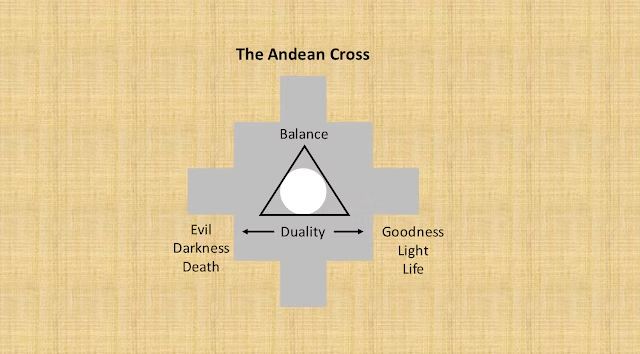
Chakana meaning centers on connection, balance, and the relationships that bring different parts of the Andean world together. Commonly called the Andean cross, the chakana is a symmetrical, stepped symbol associated with Indigenous cultures of the Andes. Its name carries ideas of a ladder or bridge, offering a starting point for understanding how it can represent movement between places, dimensions, and ways of experiencing life.
During a journey through Peru, the symbol can invite questions about history, spirituality, and cultural identity. Why does it have a stepped shape? What do its different levels represent? How does it relate to the mountains, the sky, and the people who live among them? These questions open a conversation about the ways Andean communities have understood their surroundings.
Exploring Chakana meaning involves ancient objects, scholarly interpretations, and the explanations shared by people today. Archaeological evidence establishes a long history for stepped-cross motifs, while their meanings depend on the object, community, and period being discussed. LACMA describes the chakana as a widespread yet incompletely understood element of ancient Andean imagery.
For travelers, this makes the Andean cross especially interesting. Learning about it encourages closer observation and more thoughtful questions. A design that first catches your attention for its geometry can become an introduction to language, memory, and the relationships between people and their landscape.
What Does Chakana Mean?
Chakana meaning begins with the idea of something that connects. Quechua dictionaries and linguistic research associate the word with ladders, bridges, and crossing between entities or spaces.
The translation depends on its context. A ladder provides passage between levels, while a bridge links places separated by an obstacle. Both images help explain why connection is central to philosophical interpretations of the symbol.
Why is it called the Andean cross?
The name “Andean cross” describes its recognizable shape and geographical association. A typical representation has four symmetrical arms with stepped edges, often surrounding a central opening.
Its geometry draws attention in several directions at once. You can follow its horizontal and vertical axes, examine the repeated steps, or focus on the relationship between its center and outer sections. This structure supports interpretations involving correspondence and balance.
Is the chakana the same as the Inca cross?
“Inca cross” is another name frequently applied to the symbol. However, its history extends beyond the Inca period. Research identifies related motifs in earlier Andean artistic traditions, including Chavín and Tiwanaku.
Using “Andean cross” acknowledges that broader history. When examining an individual example, its cultural origin and date help explain the setting in which its makers used it.
Where Did the Chakana Originate?
Understanding Chakana meaning requires looking across a long sequence of Andean societies. Researchers study stepped-cross forms in textiles, ceramics, sculpture, and architecture to trace their distribution.
An individual motif provides evidence of a particular artistic choice. Understanding what that choice communicated requires examining its surroundings, the material carrying it, and the society responsible for its production.
What does archaeological evidence tell us?
A textile in LACMA’s collection, dated to approximately 200–600 CE, contains a motif identified as a chakana. The museum places it within a much longer history of Andean imagery.
This offers travelers an example of how an apparently simple pattern can preserve complex questions. Looking closely at an old textile encourages us to consider its makers, its original purpose, and the knowledge involved in creating it.
Did its meaning stay the same over time?
The Chakana meaning explained by a contemporary artist may emphasize concerns important to that person’s community. A researcher examining an archaeological object may approach the same shape through its historical setting.
When visiting a museum, read the object label before applying an interpretation you encountered elsewhere. Its date, place of origin, and description can help you ask more precise questions about its possible significance.
What Do the Chakana’s Steps and Center Represent?
The stepped outline is the feature most visitors recognize immediately. It provides a framework through which people explain relationships between different dimensions of existence.
Many descriptions of Chakana meaning connect the symbol with an Andean understanding of the cosmos. These explanations can help travelers approach unfamiliar concepts, particularly when presented with their cultural and interpretive context.
What are Hanan Pacha, Kay Pacha, and Ukhu Pacha?
A frequently used interpretation describes three interconnected dimensions.
These concepts express relationships between dimensions of existence. Scholarly discussions emphasize that Ukhu Pacha can involve both death and the sources of life, including springs and other connections with the earth’s interior.
What does the center represent?
In interpretations of Chakana meaning, the center can express the point where different directions and relationships meet. Its visual position makes it a reference around which the rest of the design is organized.
When someone explains the central opening to you, ask which tradition or interpretation they are describing. This gives their explanation a clearer setting and helps you appreciate the particular significance they attach to it.
How are the condor, puma, and serpent connected?
The three dimensions are often explained through animal associations. The condor corresponds to the upper world, the feline, frequently represented as a puma, to earthly existence, and the serpent to the lower world.
These associations connect the cosmic interpretation with recognizable living creatures. Their movement through the sky, across land, or close to the earth makes the relationship easier to visualize.
How Does the Chakana Express Balance and Connection?
Beyond its individual parts, Chakana meaning concerns the relationships that hold those parts together. Contemporary scholarship discusses the symbol through ideas such as reciprocity, correspondence, and complementarity.
These concepts invite a relational understanding of existence. People, community life, the natural environment, and spiritual experience are considered through the connections between them.
What does complementarity mean?
Complementarity describes how different elements can contribute to a connected whole. Studies of Andean philosophy discuss relationships such as above and below through this perspective.
The cross’s intersecting axes provide a visual way to approach the idea. Each direction exists in relation to others, with the crossing point bringing them into a shared structure.
How does reciprocity relate to the symbol?
Reciprocity concerns mutual relationships and obligations. Within philosophical interpretations, it helps explain a world understood through ongoing exchanges between its participants.
For a visitor exploring Chakana meaning, reciprocity offers a question to carry into conversations. Ask how the person explaining the symbol connects it with everyday responsibilities, cooperation, or care for the surrounding environment.
Is the Chakana Connected to the Southern Cross?
The relationship between the chakana and the Southern Cross is a widely discussed interpretation. Some contemporary explanations connect its four-part form with the constellation.
Academic research also records different uses of the word chakana in relation to celestial features. These findings make the history of the astronomical association a subject requiring careful interpretation.
Why do explanations of the astronomical connection differ?
Sources approach Chakana meaning through different evidence. Linguistic records, archaeological objects, contemporary ceremonies, and oral explanations each answer particular questions.
Ask how a claim is supported. A description of a present-day celebration can explain how participants understand the symbol today. Establishing how an ancient community understood it requires evidence from that historical context.
What is celebrated on Chakana Day?
The Museo Chileno de Arte Precolombino identifies May 3 as a day associated with celebrations of the chakana. Research also documents Andean-cross ceremonies and their historical relationship with Christian cross festivities.
A study of urban sikuri groups in Lima examines how communities recreated these celebrations and gave the crosses religious and ideological significance. The research illustrates how symbols acquire meaning through collective practice.
Where Can Travelers Learn About the Chakana in Peru?
Exploring Chakana meaning during a trip works best through observation and conversation. Museums, guided archaeological visits, and encounters with artisans provide opportunities to ask how particular examples are understood.
Before your visit, choose a few questions that interest you. You might focus on the design’s history, the materials used to create it, or the explanation offered by its maker.
Look closely during archaeological visits
A scholarly study includes a photographed example identified as a half-chakana in the architecture of Ollantaytambo. It discusses the motif alongside broader ideas about connecting dimensions and spaces.
If you encounter a similar form during a visit, ask your guide to identify it and explain the evidence behind the interpretation. Taking notes can help you distinguish the site’s documented history from broader symbolic explanations.
Ask artisans about their own designs
When discussing Chakana meaning with an artisan, begin with the particular piece in front of you. Ask who made it, what materials were used, and why the artist chose its colors or arrangement.
Give the maker time to explain the work in their own words. If you decide to purchase it, recording their name and explanation can make the object a more meaningful reminder of your journey.
Approach ceremonies with consideration
If a community welcomes visitors to a celebration, ask about participation and photography before joining. Follow the organizer’s guidance about where to stand and which moments require privacy.
You can show interest without expecting access to every practice. Listening carefully and respecting boundaries creates space for the exchange your hosts choose to share.
Frequently Asked Questions About Chakana Meaning
Does every chakana have the same interpretation?
Interpretations depend on the source and context. When learning about Chakana meaning, identify whether the explanation concerns an ancient object, a philosophical reading, or a contemporary practice.
A useful follow-up question is how the speaker learned that interpretation. Their answer can introduce you to family knowledge, community traditions, museum research, or another source.
Can I buy a chakana as a souvenir?
If you want to purchase one, ask the seller about its maker and materials. Discussing the piece provides an opportunity to understand what you are buying.
Choose something you appreciate and can care for appropriately. Keeping the artist’s explanation with it preserves the encounter as well as the object.
What should I ask a local guide?
Ask where the example comes from, how it is dated, and which parts of its interpretation are supported by research. You can also ask how people in the area understand the symbol today.
These questions encourage a richer discussion of Chakana meaning and help connect a general explanation with the place you are visiting.
Discover the Andean Cross Through the People Who Explain It
Chakana meaning offers travelers a way to explore connection, cultural memory, and the interpretation of Andean art. Its geometry provides a starting point for questions that reach into language, history, and community life.
During your time in Peru, allow those questions to guide your attention. Read museum labels, listen to local explanations, and ask artisans about their work. Each encounter can add context to the symbol and depth to your experience of the Andes.