Image
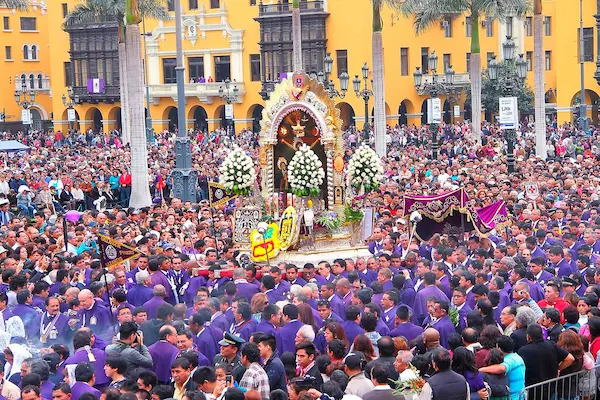
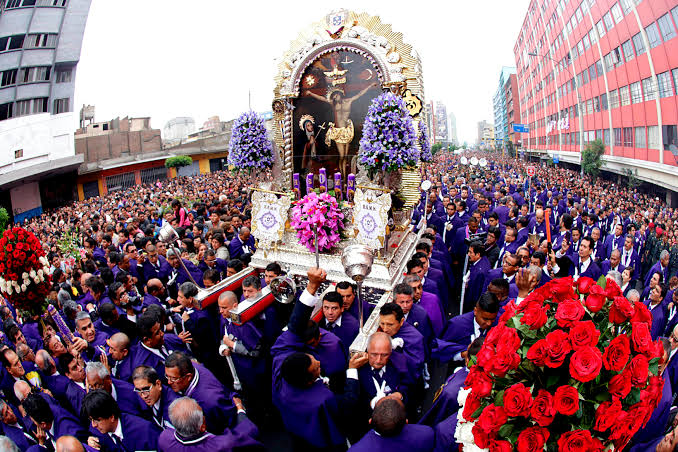
Señor de los Milagros is one of Peru’s most deeply rooted religious and cultural traditions, transforming the streets of Lima into a sea of purple every October. Also known in English as the Lord of Miracles, this centuries-old celebration honors an image of Christ that has become a powerful symbol of faith and devotion for millions of Peruvians. Throughout the month, thousands of people take part in religious ceremonies, prayers, and processions, while the distinctive purple habits worn by devotees become one of the most recognizable sights in the Peruvian capital. Beyond its religious significance, Señor de los Milagros offers a fascinating glimpse into Peru’s history and the traditions that continue to shape its cultural identity.
For travelers visiting Lima in October, witnessing the Señor de los Milagros Festival can be a memorable way to experience a side of Peru that goes beyond its archaeological sites and natural landscapes. The main processions bring together devotees, musicians, traditional food vendors, and visitors as the sacred image makes its way through the historic streets of the city. From the history behind the devotion to the meaning of the purple color, the traditional turrón de Doña Pepa, and the customs surrounding the processions, understanding this celebration provides a deeper appreciation of Peruvian culture. In this guide, we explore the origins of Señor de los Milagros, how it is celebrated today, and what travelers should know if they want to experience this remarkable tradition in Lima.
The history of Señor de los Milagros in Peru is closely tied to the history of Lima and to a series of events that transformed a simple image of Christ into one of the country’s most enduring religious and cultural symbols. Its story began in the colonial period, when an image of Christ crucified was painted on an adobe wall in the Pachacamilla area of Lima. Over the following decades, earthquakes, religious devotion, public processions, and the efforts of key figures helped establish the tradition that continues to bring thousands of people into the streets every October.
The story of Señor de los Milagros begins in Pachacamilla, an area of colonial Lima where an image of Christ crucified was painted on an adobe wall. According to the traditional account, the painting was created by an enslaved man from Angola and became associated with a community of Africans and people of African descent living in the area. Although popular tradition places the painting earlier, historical records cited by the Biblioteca Nacional del Perú establish evidence of the image's existence by 1651.
One of the most important moments in the history of Señor de los Milagros occurred during the earthquake that struck Lima and Callao in 1655. The earthquake caused extensive destruction across the city, damaging or destroying numerous buildings and claiming many lives. Yet the adobe wall bearing the image of Christ remained standing. For those who already gathered around the mural, its survival was regarded as a miraculous event and significantly strengthened devotion to the image.
As the number of devotees increased, colonial religious authorities became concerned about the gatherings taking place around the mural. In 1671, authorities ordered that the image be removed and that public meetings around it be prohibited. According to historical accounts preserved by the Biblioteca Nacional del Perú, there were several attempts to erase the painting, but they were unsuccessful.
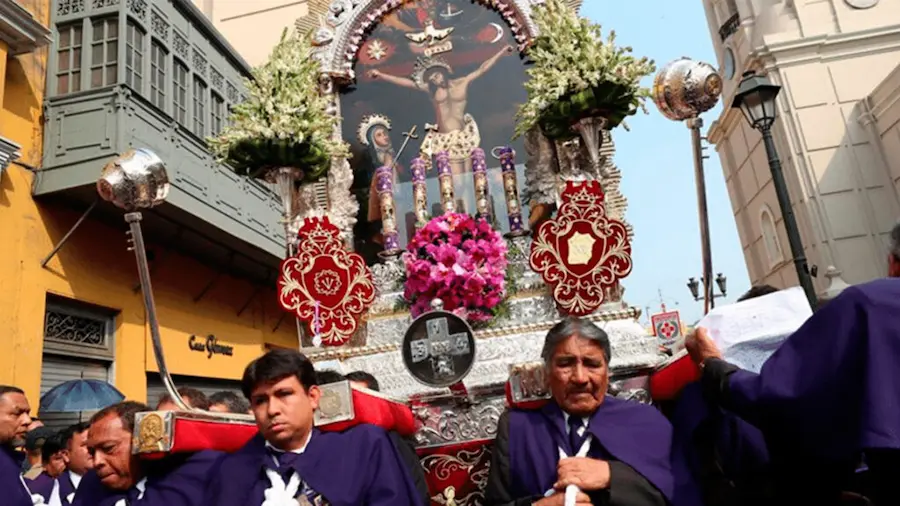
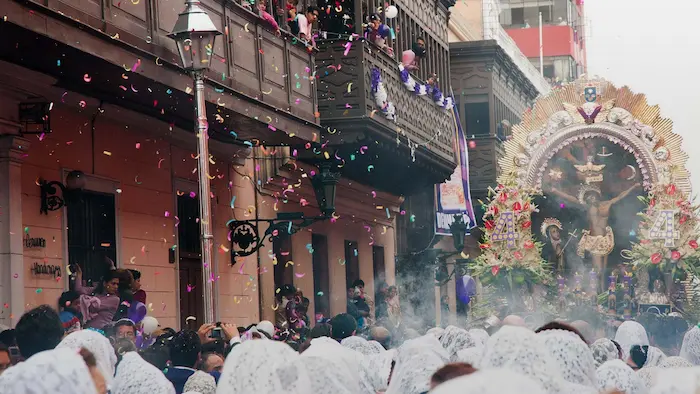
The celebration of Señor de los Milagros is centered around a series of religious processions that take place throughout Lima during October, a month widely known as the “Purple Month.” During these events, a replica of the revered image of Christ is carried through the streets on a large wooden platform, accompanied by thousands of devotees, members of the brotherhood, musicians, singers, and people who come to pray or simply witness the tradition. The processions are much more than a religious ceremony; they are deeply rooted in Lima’s history and have become one of the most recognizable expressions of Peruvian culture.
Throughout the month, the city takes on a distinctive atmosphere as purple clothing, decorations, religious symbols, and traditional foods become increasingly visible. Devotees participate in different ways, from wearing the characteristic purple habits and following the procession to making personal promises and offering prayers. For visitors in Lima during October, understanding these customs provides a better appreciation of why Señor de los Milagros continues to hold such an important place in Peruvian society.
The processions are the central event of the Señor de los Milagros celebration in Lima. During the main religious dates in October, the image of Christ is placed on a large and richly decorated platform and carried through different streets of the city. The route traditionally begins and ends at the Sanctuary of Las Nazarenas, the principal religious center associated with the devotion, while thousands of people gather along the streets to accompany the image, pray, or watch the procession pass.
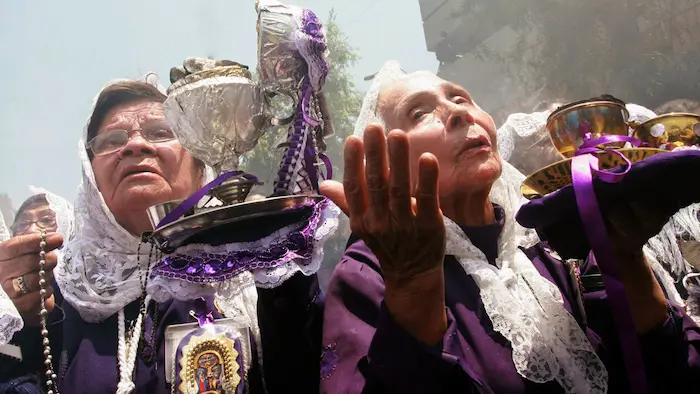
The color purple is one of the most distinctive symbols associated with Señor de los Milagros. During October, many devotees wear purple habits, dresses, shirts, or other garments as a visible expression of their devotion. Because of this tradition, October is commonly known in Peru as the “Mes Morado,” or “Purple Month.”
For many devotees, wearing purple is connected to a religious promise or personal commitment to the Señor de los Milagros. Some people wear the traditional habit throughout October, while others wear purple clothing when attending the processions or religious ceremonies. The practice has also become an unmistakable part of Lima’s visual identity during this time of year, with businesses, streets, churches, and public spaces often incorporating purple decorations.
Prayer and music play an important role throughout the Señor de los Milagros processions. As the image moves slowly through the streets, devotees pray, sing religious hymns, and recite prayers as an expression of faith. The atmosphere can change from quiet and solemn moments to collective singing as groups of worshippers accompany the image along the route.
Many devotees also participate because they have made a promise, or “promesa,” connected to the Señor de los Milagros. These personal commitments can take different forms, including wearing the purple habit, attending the procession, walking behind the image, or participating in religious services. For some families, accompanying the procession is a tradition passed from one generation to the next.
The Brotherhood of the Señor de los Milagros of Nazarenas plays a fundamental role in organizing and carrying out the processions. Its members are responsible for important aspects of the tradition, most visibly the carrying of the image through the streets of Lima. The task requires coordination, physical endurance, and a strong personal commitment because the platform is extremely heavy and the procession can last for many hours.
The men who carry the platform, commonly known as cargadores, work in groups and take turns carrying the weight as the procession progresses. Their movements must remain coordinated to keep the platform stable while navigating crowded streets and long distances. For many members, being a cargador is not simply a physical responsibility but an expression of faith and a personal act of devotion.
The Señor de los Milagros celebration is accompanied by a variety of traditions and customs that have developed over centuries and are still part of everyday life in Lima during October. While the religious processions are the most visible part of the celebration, the “Purple Month” also influences the way people dress, the foods they enjoy, and the appearance of streets, churches, shops, and other public spaces throughout the city. These customs give the celebration a distinctive character and allow visitors to see how deeply the tradition is connected to Peruvian culture.
Wearing purple is one of the most recognizable customs associated with Señor de los Milagros. During October, many devotees wear purple habits or other purple garments as an expression of their faith and devotion. The tradition is especially noticeable during the processions, when large groups of people dressed in purple accompany the sacred image through the streets of Lima.
For some devotees, wearing the traditional purple habit is connected to a personal promise, or promesa, made to the Señor de los Milagros. Others wear purple because it has become a family tradition or as a way of participating in the celebration. The custom is so widespread that October is commonly referred to as the Mes Morado, or “Purple Month.”
One of the most famous culinary traditions associated with Señor de los Milagros is turrón de Doña Pepa, a traditional Peruvian sweet that becomes especially popular throughout October. This dessert consists of layers of a soft, crumbly dough covered with a sweet syrup and decorated with colorful sprinkles and small candies. Its distinctive appearance and rich flavor have made it one of the foods most closely associated with the Mes Morado.
Although turrón de Doña Pepa can be found in Peru at other times of the year, its connection with the Señor de los Milagros celebration is particularly strong. During October, bakeries, markets, supermarkets, and specialized pastry shops across Lima offer the dessert in different sizes and varieties, making it almost impossible to miss during the festivities.
Food plays an important role in the atmosphere surrounding the Señor de los Milagros celebrations. As thousands of people gather in Lima for the processions, traditional food and sweets become part of the experience, particularly around areas where large crowds of devotees and visitors congregate.
Turrón de Doña Pepa is undoubtedly the dessert most strongly associated with the month, but visitors may also encounter other examples of Peruvian cuisine during their time in Lima. Street vendors, restaurants, bakeries, and food stalls can offer a variety of traditional dishes and snacks, allowing travelers to combine the cultural experience of the celebration with Peru's renowned culinary heritage.
The influence of Señor de los Milagros can also be seen throughout Lima in the form of purple decorations. During October, the characteristic color appears around churches, businesses, streets, markets, and other spaces connected to the celebration. Purple banners, ribbons, flowers, religious images, and other decorative elements help create the distinctive visual identity of the Mes Morado.
These decorations are particularly noticeable around places associated with the processions and religious activities. Shops and businesses may also incorporate purple into their displays, while vendors sell souvenirs, religious items, clothing, and other products connected to the celebration.
Lima is the heart of the Señor de los Milagros celebration, and October is an especially interesting time to explore the city and witness this centuries-old tradition. The main religious activities are closely connected to the historic center, where the processions bring together thousands of devotees, members of the Brotherhood, musicians, and visitors. While the exact procession routes and schedules can change each year, certain places remain particularly important for understanding and experiencing the celebration.
For travelers, attending a procession requires a little planning, especially because the events attract very large crowds and can affect transportation around central Lima. Knowing where the main religious sites are located, checking the official schedule, and understanding local customs can make the experience more comfortable while also allowing visitors to participate respectfully in one of Peru's most important cultural traditions.
The Santuario de Las Nazarenas is one of the most important places associated with Señor de los Milagros in Lima. Located in the historic center, the sanctuary is closely connected to the image of the Señor de los Milagros and serves as an important gathering point for devotees throughout the year, particularly during October.
The sanctuary's history is closely linked to the development of the devotion. It houses the revered image that is taken through the streets during the major processions, making it an essential place for understanding the religious significance of the celebration. During the Purple Month, thousands of people visit the sanctuary to pray, attend religious services, and accompany the image when it begins or returns from its procession.
The Historic Center of Lima provides the setting for many of the most memorable moments of the Señor de los Milagros celebrations. As the procession moves through the city, historic streets and public spaces become gathering places for thousands of devotees who come to accompany the image, pray, or observe the religious tradition.
This makes October an interesting time to explore central Lima from a cultural perspective. Visitors may encounter people dressed in purple, incense being carried along the procession route, religious songs, street vendors, and businesses decorated for the Mes Morado. The celebration becomes part of the urban landscape, creating a unique atmosphere around some of the city's historic buildings and traditional streets.
Attending a Señor de los Milagros procession can be a memorable cultural experience, but visitors should remember that these events are primarily religious celebrations rather than tourist attractions. A little preparation can help travelers enjoy the experience while showing consideration for the people taking part in the devotion.
For travelers visiting Peru in October, the Señor de los Milagros celebration can raise many questions about its history, meaning, traditions, and the best way to experience it in Lima. These frequently asked questions cover the essential details visitors should know before attending a procession or exploring the city during the Purple Month.
Señor de los Milagros, also known in English as the Lord of Miracles, is one of Peru’s most important religious and cultural traditions. It centers around an image of Christ crucified that was painted on an adobe wall in Lima during the 17th century. Over the centuries, the devotion surrounding the image developed into large processions and religious celebrations, particularly during October.
Señor de los Milagros is celebrated primarily throughout October, which is known in Peru as the Mes Morado, or Purple Month. Several major processions take place during the month, with thousands of devotees gathering in the streets of Lima. The exact dates, times, and routes of the processions can vary each year, so visitors should check the official schedule before attending.
October became closely associated with Señor de los Milagros because several important events in the history of the devotion took place during this month. The most significant connection is to the earthquake of October 1687, after which a copy of the revered image was carried through the streets of Lima in procession. Another major earthquake occurred on October 28, 1746, further strengthening the association between the devotion and this time of year.
Purple is the characteristic color of the Señor de los Milagros celebration. Many devotees wear traditional purple habits or other purple clothing during October as an expression of their faith and devotion. For some, wearing the habit is connected to a personal promise made to the Señor de los Milagros. The widespread use of purple is also why October is commonly called the Purple Month in Peru.
The main Señor de los Milagros processions take place in Lima, particularly around the historic center and the Santuario de Las Nazarenas. The sacred image is carried through the city's streets on a large platform while thousands of devotees accompany it. The specific route can change from one year to another, so travelers should check the official procession itinerary before visiting.
Señor de los Milagros is deeply connected to Lima because the devotion originated in the city during the colonial period. The original image was painted in the Pachacamilla area, and many of the most important events in its history took place in Lima. Today, the capital remains the center of the celebration, with the main processions attracting large numbers of devotees every October.
Turrón de Doña Pepa is a traditional Peruvian sweet strongly associated with the October celebrations of Señor de los Milagros. It is made with layers of a soft, crumbly dough covered in a sweet syrup and decorated with colorful sprinkles and candies. Although it can be enjoyed throughout the year, it becomes particularly popular in Lima during the Mes Morado and is one of the traditional foods visitors can try during the celebration.
Yes, tourists can attend the Señor de los Milagros processions in Lima. Visitors are welcome to observe and experience this important Peruvian tradition, but it is important to remember that the procession is primarily a religious event for devotees. Travelers should remain respectful, avoid obstructing the procession, and follow any instructions from organizers, religious authorities, or local officials.
Travelers should expect very large crowds, particularly during the main procession dates, and should plan transportation accordingly because streets along the route may be closed or heavily congested. It is advisable to check the official schedule and route beforehand, keep personal belongings secure, and wear comfortable clothing and shoes. Visitors should also be considerate when taking photographs and avoid interrupting prayers, ceremonies, or the movement of the procession. Checking current information shortly before attending is especially important because routes and schedules may change from year to year