Image

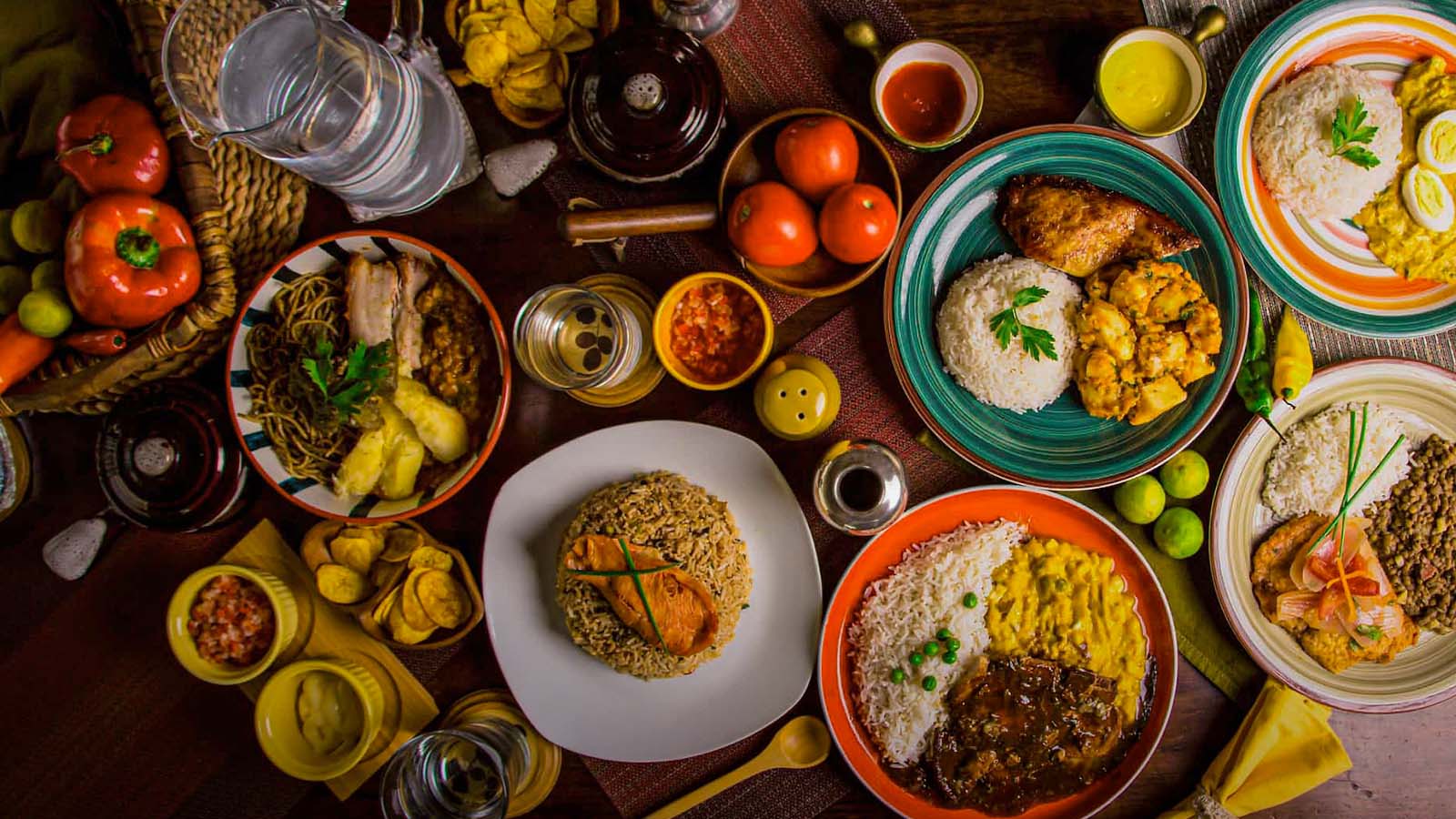
When we discuss Inca cuisine, we're not merely discussing foods from antiquity or items that have been consigned to history books. We are discussing flavors that we still consume on a daily basis almost mindlessly: Andean herbs, corn, quinoa, potatoes in all their forms, and methods that have been passed down through the years. This cuisine has its roots in the Andes, where it has adapted to the soil, climate, and altitude while always respecting the natural world and the notion of communal sharing. Because of this, a lot of Peruvian foods are still based on Inca cuisine today.
Inca Food represents one of the most sophisticated food systems of the ancient world. Rooted in the Andean civilization, it combines nutritional balance, environmental adaptation and cultural meaning, elements that still influence modern gastronomy and global food trends.
Inca Food emerged from a highly advanced agricultural system developed by Andean civilizations long before the expansion of the Inca Empire. These societies learned to domesticate crops in extreme environments, from coastal valleys to high-altitude plateaus, using terraces (andenes) that prevented erosion and maximized water use. Food production was strategically planned according to altitude, climate and seasonality, allowing a stable and diverse diet across the empire.
The Incas organized food distribution through state-controlled storage systems known as collcas, ensuring access to supplies during droughts, wars or long journeys. This structured approach made Inca Food not only a means of survival, but also a pillar of social organization and imperial expansion.
In Inca society, food was inseparable from cultural identity and spiritual beliefs. Inca Food was consumed during ceremonies, agricultural rituals and communal gatherings, reinforcing social bonds and collective responsibility. Offerings of food to the gods and to Pachamama symbolized gratitude and respect for nature’s cycles.
From a nutritional perspective, Inca Food was remarkably balanced. The diet included complex carbohydrates, plant-based proteins, minerals and vitamins that supported physical endurance and resistance to high-altitude conditions. This nutritional intelligence explains why many Inca Food staples are now studied and valued by modern nutrition science. For travelers exploring the Andes, learning about these traditions can also add a deeper cultural dimension to their journey with a local Peru tour operator.
Inca civilization food: what did the Incas eat?
The Inca civilization food system was based on locally grown crops, preserved ingredients, and sustainable farming practices that allowed communities to thrive across the diverse landscapes of the Andes. Rather than relying on a single staple, the Incas developed a varied diet adapted to different altitudes and climates, making the most of the natural resources available in each region.
Their daily meals typically included native potatoes, quinoa, maize (choclo), beans, squash, peppers, and a wide variety of Andean herbs. Protein came from sources such as cuy (guinea pig), llamas, alpacas, freshwater fish, and charqui, a dried meat that could be stored for long periods. These foods provided the energy and nutrients needed for agricultural work, military expeditions, and life in high-altitude environments.
One of the defining characteristics of Inca civilization food was its emphasis on food preservation. Techniques like producing chuño, a naturally freeze-dried potato, and charqui allowed the Incas to store food for months or even years. Combined with extensive state granaries known as collcas, these methods ensured food security during harsh weather conditions, poor harvests, or times of conflict.
Beyond nutrition, food also played a central role in Inca society. Agricultural products were offered to Pachamama (Mother Earth) during ceremonies, while communal meals strengthened social ties and reflected the collective values of the empire. This close relationship between agriculture, spirituality, and community made Inca civilization food much more than a diet, it was a fundamental part of everyday life and one of the pillars of the Inca civilization.
The Inca tribe food system was built around self-sufficiency, resourcefulness, and a deep understanding of the Andean environment. Rather than depending on imported goods or intensive livestock farming, the Inca people relied on native crops, preserved foods, and locally available protein sources that could support communities across mountains, valleys, and high plateaus.
Food was closely connected to agriculture, family life, and religious traditions. Every harvest, meal, and preservation technique reflected the Incas' respect for nature and their ability to adapt to one of the world's most challenging landscapes. This balanced approach allowed the Inca civilization to feed millions of people while maintaining a sustainable food system that continues to inspire modern agriculture.
The daily diet of the Inca people consisted mainly of foods that could be cultivated in the Andes. Potatoes, quinoa, maize, beans, squash, and native peppers formed the foundation of most meals, while herbs added flavor and medicinal properties.
Protein sources varied depending on the region and included cuy (guinea pig), llama, alpaca, freshwater fish, and occasionally wild game. These ingredients created nutritious meals capable of supporting physically demanding agricultural work and life at high altitudes.
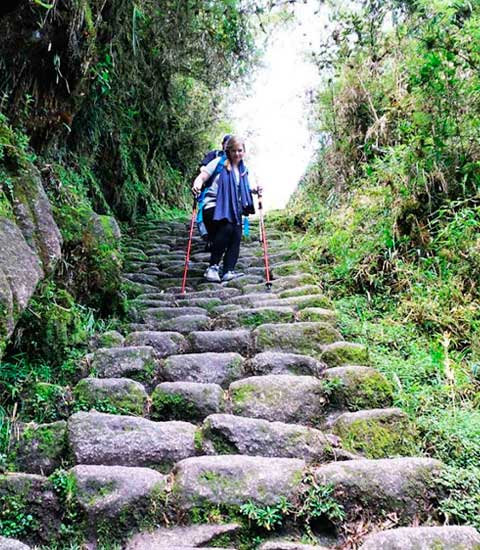
Today, many of the landscapes shaped by these agricultural traditions can still be seen while traveling through the Andes. For visitors who want to experience the mountains beyond their archaeological history, a 2 day camping trek offers the opportunity to combine the Inca Trail with an overnight experience surrounded by the landscapes that have shaped Andean culture for centuries.
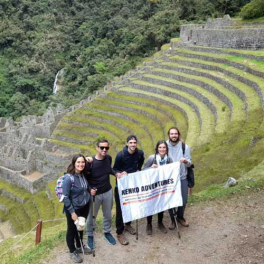
Agriculture was central to Inca tribe food. Farmers built agricultural terraces, known as andenes, to cultivate crops on steep mountain slopes while preventing soil erosion and maximizing irrigation.
The Incas also understood how different altitudes affected crop production. By growing specific foods in different ecological zones, they created a diverse agricultural network that ensured a steady food supply throughout the empire.
One of the greatest strengths of Inca tribe food was its sophisticated preservation methods.
Potatoes were transformed into chuño through a natural freeze-drying process that allowed them to last for years. Meat was preserved as charqui, making it lightweight, nutritious, and ideal for transportation.
These preserved foods were stored in large state warehouses called collcas, which supplied communities during droughts, military campaigns, and poor harvest seasons.
Traditional dishes are the living expression of Inca Food. Many recipes have survived centuries, preserving ancestral techniques and ingredients that continue to define Andean gastronomy.
For visitors traveling through Cusco, experiencing these traditions alongside the region’s archaeological sites can make an Andean journey feel much more connected to its history.
For travelers interested in experiencing the Andes beyond archaeological sites, combining cultural exploration with local food traditions can offer a more complete perspective of the region. Those looking for a shorter trekking experience can consider a Short Inca Trail 2 Days With Hotel, which includes visits to important Inca sites along the route to Machu Picchu.
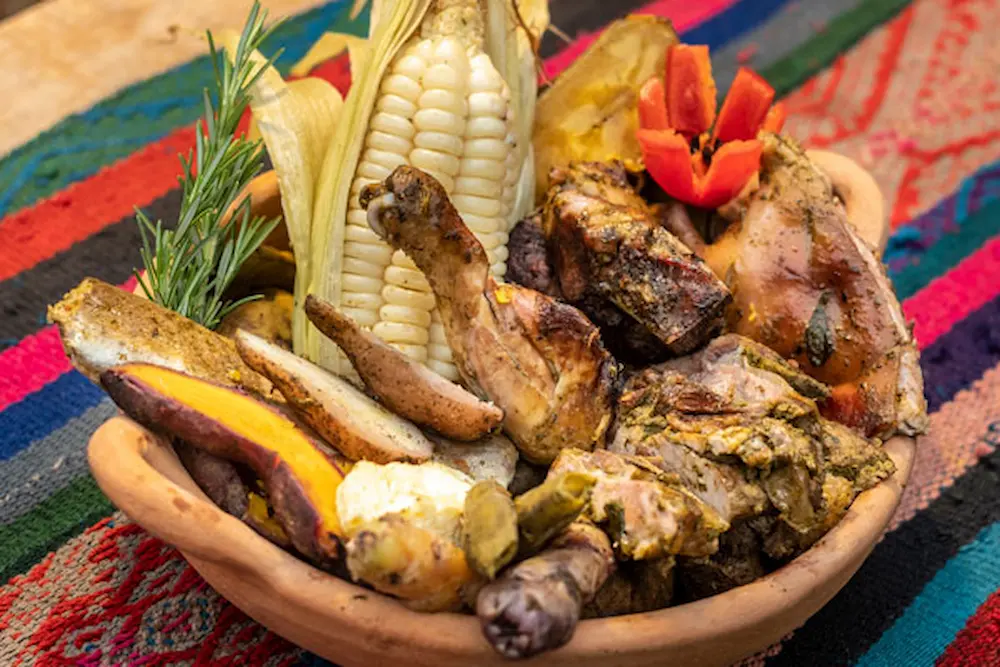
Pachamanca is one of the most iconic expressions of Inca Food, representing both culinary technique and spiritual symbolism. Ingredients such as meats, tubers and corn are seasoned with herbs and cooked underground using heated stones, creating a slow-cooking process that enhances natural flavors.
This dish is traditionally prepared during communal celebrations, reinforcing unity and gratitude toward Pachamama. Pachamanca embodies the essence of Inca Food: respect for nature, shared labor and collective enjoyment.
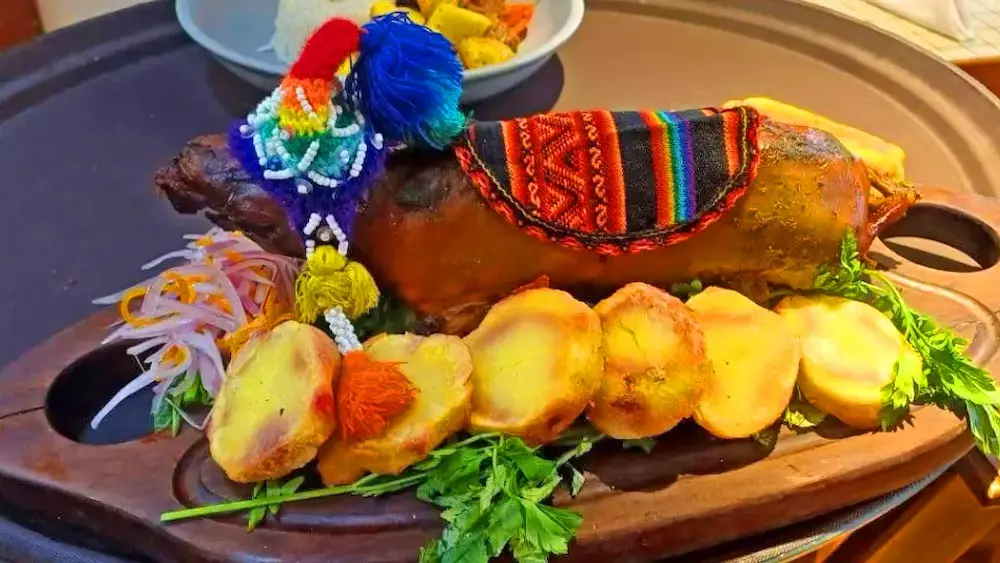
Cuy was a vital protein source in Inca Food, particularly in the high Andes where livestock options were limited. It was easy to raise, required minimal resources and provided high-quality nutrition.
Beyond its dietary role, cuy held ceremonial and medicinal significance. It was often consumed during important celebrations or used in traditional healing practices, highlighting the deep cultural meaning embedded in Inca Food traditions.
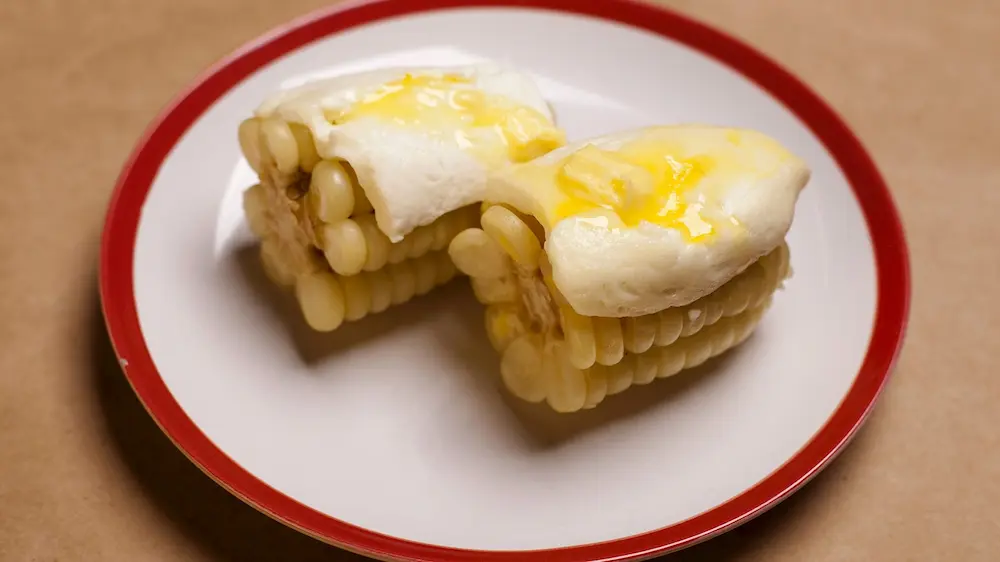
Choclo-based preparations were fundamental to Inca Food, forming part of soups, stews and side dishes. Its dense texture and natural sweetness made it an ideal complement to tubers and grains.
Choclo symbolized sustenance and continuity, often served during agricultural festivals. Its enduring presence in Andean cuisine reflects the lasting influence of Inca Food practices.
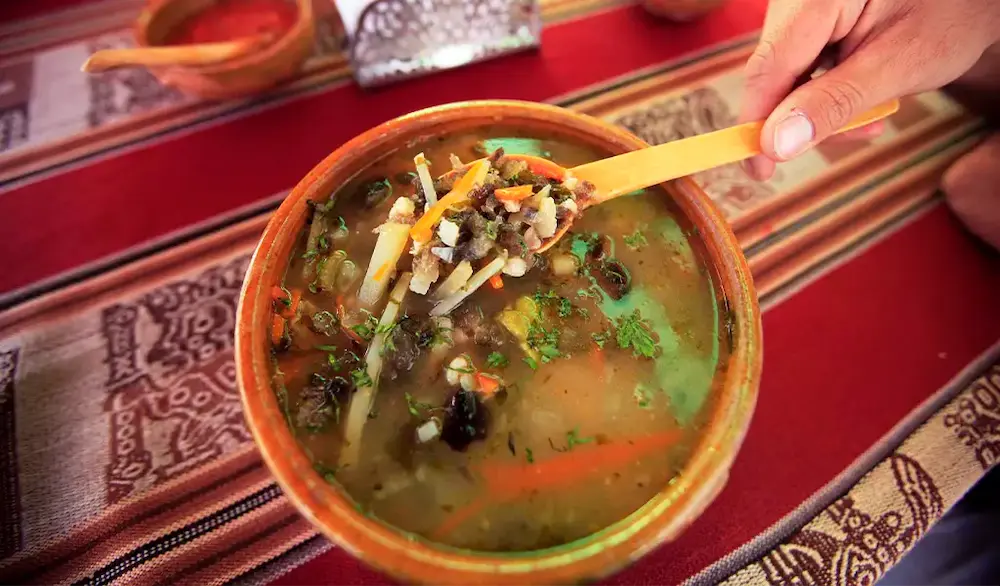
Soups and stews were essential in Inca Food due to the cold climate of the highlands. Prepared with potatoes, grains, herbs and sometimes meat, these dishes provided warmth and sustained energy. Many traditional Andean soups today trace their origins back to these ancestral preparations.
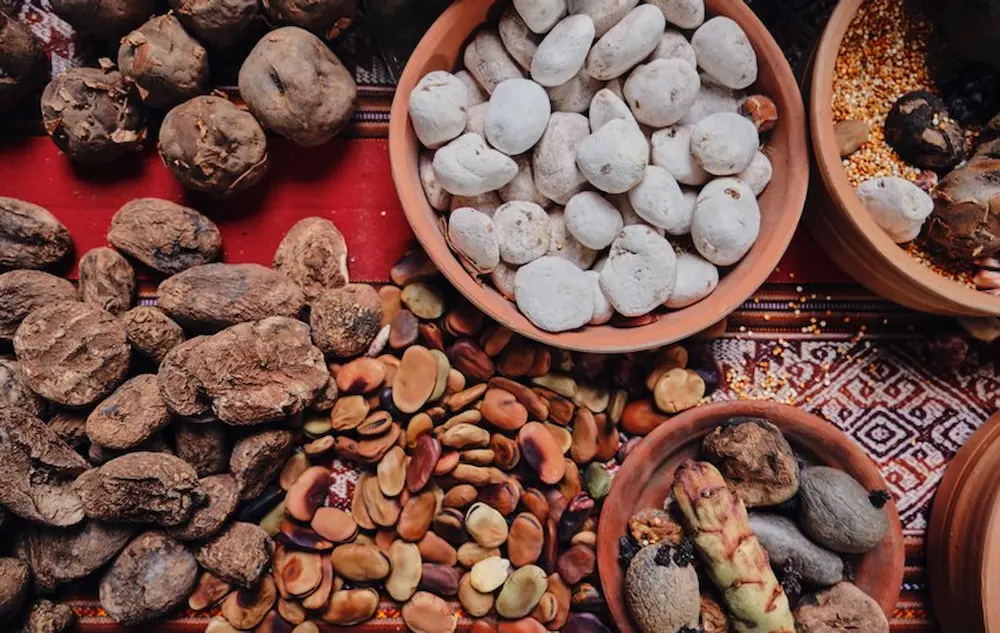
Chuño was not only a preservation method but also a base ingredient for many Inca Food dishes. It was commonly used in soups and stews, especially during cold seasons, providing long-lasting energy and nutritional value. Its versatility made it a key food for daily consumption and long journeys.
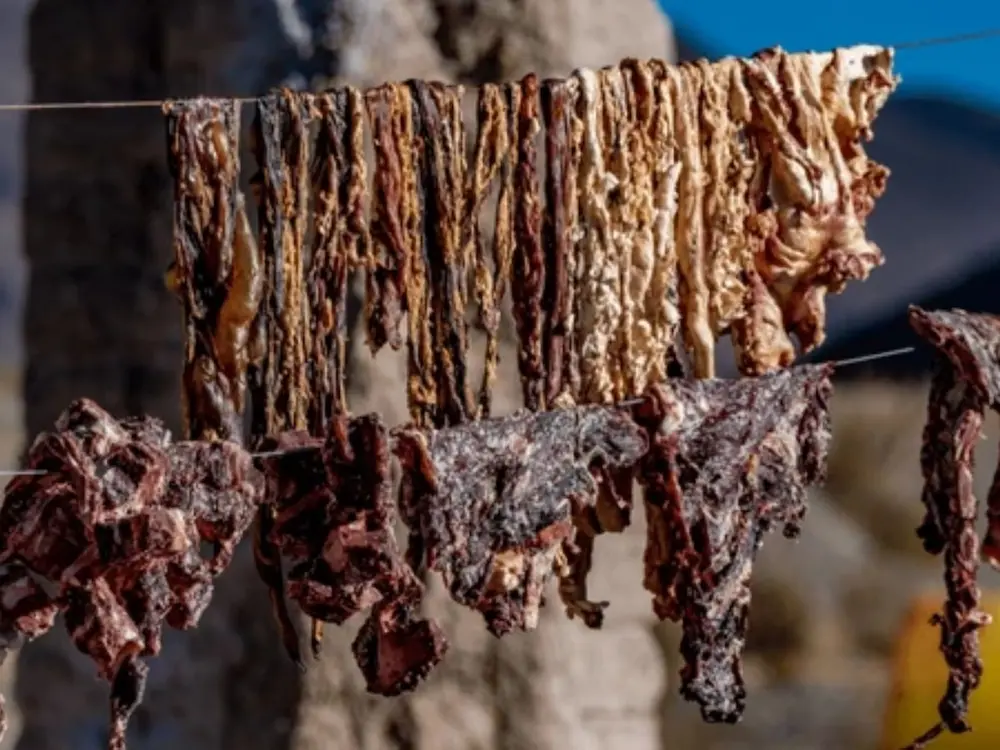
Charqui, dried and salted meat, was widely consumed in Inca Food due to its durability and high protein content. It was often added to stews or eaten with tubers and grains, making it an essential food for travelers, messengers and soldiers across the empire.
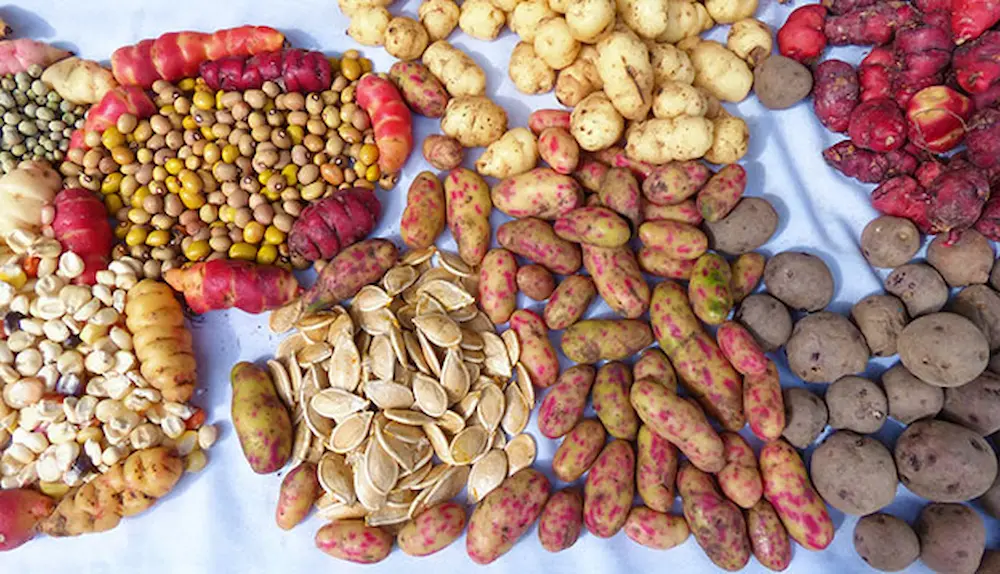
Combining grains like quinoa with tubers such as potatoes or oca was common in Inca Food. These combinations created balanced meals rich in carbohydrates and proteins, ideal for sustaining long working days in agricultural and mountainous environments.
Inca Food is not only defined by ingredients but also by its cooking and preservation techniques, developed to maximize flavor, nutrition and food security. Many of these traditions are particularly meaningful when experienced in the landscapes where Andean communities have preserved them for generations. Travelers interested in combining hiking and cultural immersion can explore different ways of reaching Machu Picchu. One option for travelers who want to experience the Andean landscape more closely is the 2 days Inca Trail with Camping, which combines hiking through the historic trail with an overnight camping experience near Machu Picchu.
Earth oven cooking was a fundamental technique in Inca Food preparation, based on cooking ingredients underground using heated stones. This method allowed slow and even heat distribution, helping preserve moisture, flavor and nutrients in foods such as meats, tubers and grains.
Beyond its culinary function, this technique reflected the communal values of Inca society. The preparation involved collective participation, turning cooking into a shared cultural practice. Additionally, earth oven cooking required minimal resources, aligning with sustainable principles that continue to inspire modern gastronomy influenced by Inca Food.
Food preservation played a key role in Inca Food systems, especially in regions with extreme climates. Chuño, produced by freeze-drying potatoes, allowed long-term storage while maintaining nutritional value and ease of transport.
Charqui, dried meat preserved with salt and air, provided a reliable source of protein for trade, travel and military expeditions. Together, these techniques ensured food security and demonstrate the advanced preservation knowledge embedded in Inca Food traditions.
Today, Inca Food continues to shape contemporary Peruvian cuisine, serving as a foundation for innovation while maintaining deep respect for ancestral knowledge. Its ingredients, techniques and philosophies have become essential elements in redefining Peru’s culinary identity on both a local and global level.
Modern chefs incorporate Inca Food ingredients such as quinoa, native potatoes and Andean herbs into fine dining experiences, combining ancestral products with global cooking techniques. This fusion allows traditional flavors to be reinterpreted in creative ways while preserving their original essence.
As a result, Peruvian gastronomy has gained international recognition, positioning Inca Food as a key influence behind its culinary prestige and global appeal.
Inca Food is rooted in principles that strongly align with sustainable gastronomy, including biodiversity preservation, seasonal consumption and respect for natural cycles. These practices promote efficient use of resources and long-term environmental balance.
Today, chefs and producers draw inspiration from Inca Food to develop responsible farming and cooking methods, responding to global demands for sustainability while honoring centuries-old Andean wisdom.
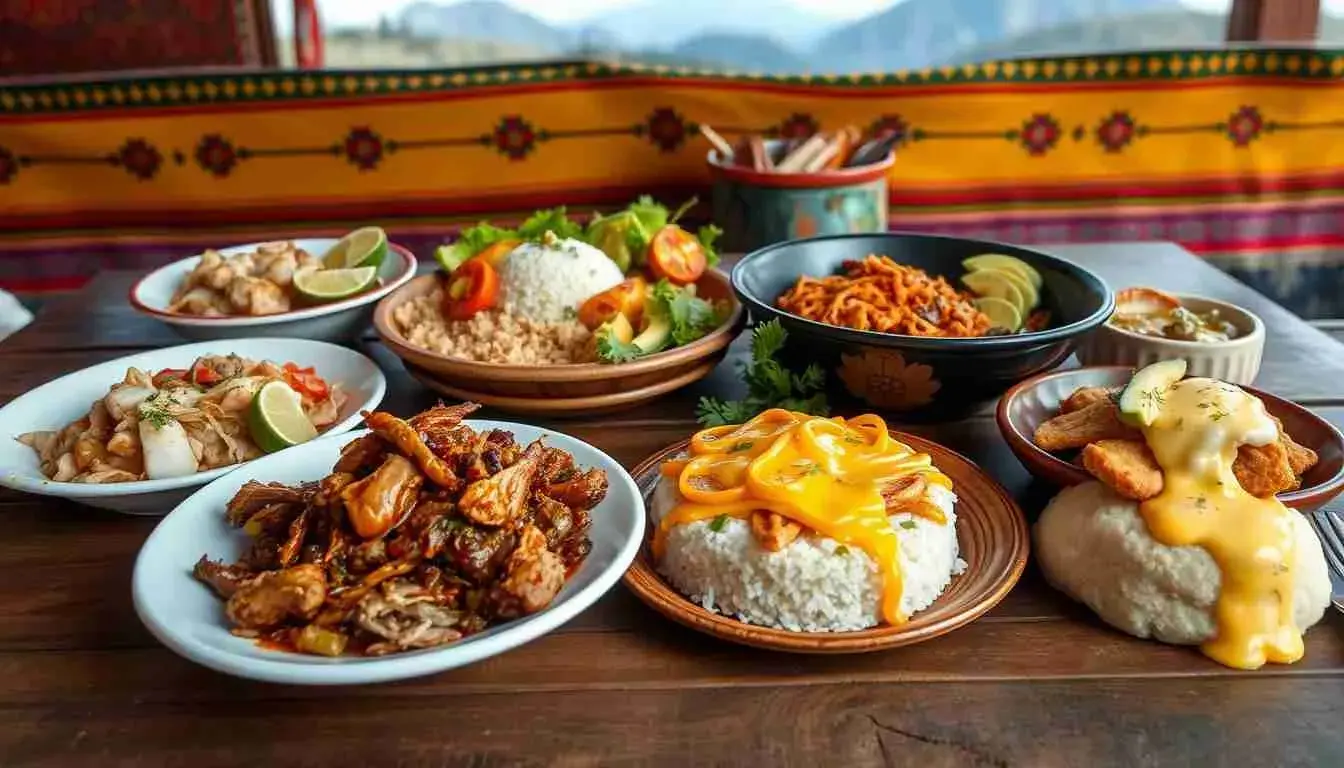
Experiencing Inca Food firsthand allows travelers and food enthusiasts to connect with Peru’s living heritage through taste, tradition and community. From highland villages to urban dining spaces, Inca Food remains a vibrant expression of cultural identity and ancestral knowledge.
Rural Andean communities continue to preserve authentic Inca Food recipes, maintaining ancestral farming, cooking and preservation methods passed down through generations. These communities offer a genuine culinary experience rooted in daily life and seasonal cycles. A journey such as the Lares Trek 3 Days can also provide travelers with a closer look at these Andean communities, where local traditions, agriculture and food remain closely connected to everyday life.
Traditional markets also play a key role, serving as meeting points where native ingredients such as potatoes, grains and herbs are sold directly by local producers. These markets provide a direct connection to the origins of Inca Food and its enduring traditions.
Many restaurants draw inspiration from Inca Food by reinterpreting traditional flavors through modern techniques and presentations. While innovative in style, these establishments respect original ingredients and ancestral preparation methods.
By bringing Inca Food to contemporary dining spaces, these restaurants help preserve Andean culinary heritage and introduce its richness to a wider, international audience.
Inca Food transcends borders, offering valuable lessons in nutrition, sustainability and cultural identity that continue to inspire global cuisine. What began as a regional food system in the Andes has evolved into a worldwide reference for responsible and heritage-based gastronomy.
Ingredients such as quinoa, native potatoes and ancient Andean grains have gained international recognition for their high nutritional value and environmental adaptability. These products are now widely used in health-conscious and plant-based diets, positioning Inca Food as a benchmark for sustainable and functional nutrition.
The growing global demand for these ingredients has also increased awareness of Andean agricultural traditions, highlighting the importance of preserving biodiversity and respecting the cultural origins of Inca Food.
Inca Food remains relevant because it connects ancestral knowledge with modern needs. Its principles—balance with nature, efficient use of resources and respect for seasonal cycles—offer practical solutions to contemporary challenges such as food security and climate change.
By blending history, nature and innovation, Inca Food ensures its place as a timeless culinary legacy, continuing to inspire chefs, producers and communities around the world.
Inca cuisine is more alive than ever and is not just a thing of the past. You can find it in markets, in home kitchens, in Andean villages, and also in restaurants that reinterpret traditional flavors with a modern twist. Revaluing this heritage is key to understanding why Peruvian gastronomy is so diverse and renowned worldwide. Ultimately, it's honest, flavorful food steeped in history, reminding us of our origins and why eating well is also a way to preserve our identity.