Image

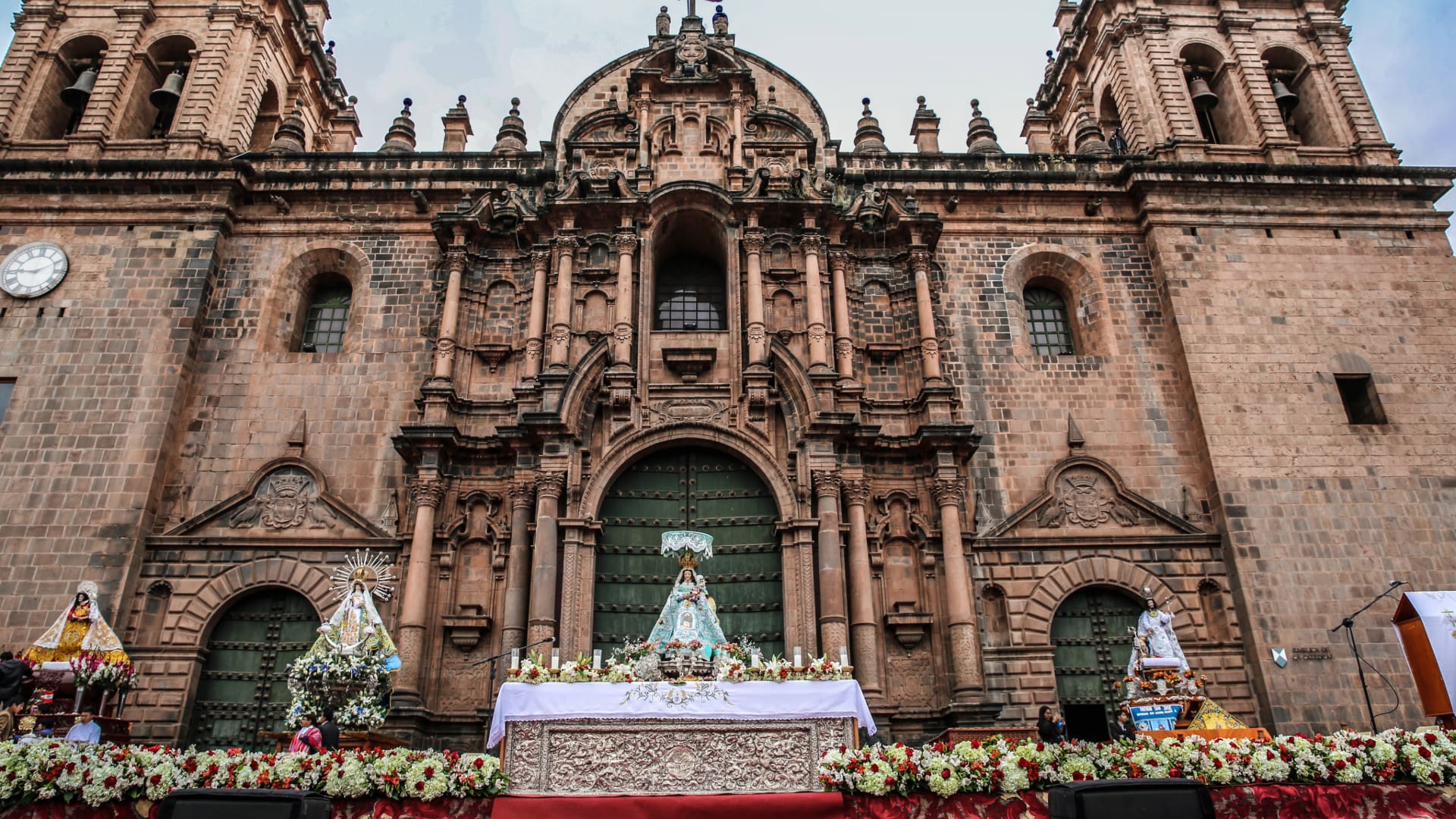
Every year, Cusco bursts into a vibrant celebration of colors, music, and traditions, blending Incan beliefs with Catholic devotion. The city transforms into a spectacle of faith, where joy fills every street corner. This cultural adventure is an unmissable experience in the heart of ancient Cusco.
You might also want to check out: 20 fascinating facts about Inca Culture
The Corpus Christi festival originated in Belgium as a Catholic tribute to the body and blood of Christ in the Eucharist. Initially, it went unnoticed, but everything changed when, in Italy, a sacred host began to bleed as a priest broke it. This event profoundly impacted the community and elevated the celebration into a highly significant festival.
Corpus Christi in Cusco is a festival that dates back to the 16th century, soon after the Spanish conquest. The event was introduced by the Catholic Church to honor the Eucharist, but over time it became deeply intertwined with indigenous rituals and local customs. Today, it represents not just a religious observance but a celebration of Cusco’s unique cultural identity.
The festival was established during the colonial era as a way to merge Catholic rituals with the Andean worldview. The Spanish introduced processions of saints and religious images, while local communities incorporated traditional music, dances, and offerings. This cultural fusion makes Corpus Christi in Cusco a festival that reflects both faith and ancestral heritage.
For Cusqueños, Corpus Christi is more than a holiday—it is a profound expression of devotion. Local communities, especially the cofradías (religious brotherhoods), play a crucial role in preparing the processions, decorating the streets, and organizing festivities. It strengthens social bonds and preserves centuries-old traditions.
You might also want to check out: What were the incas known for?
Corpus Christi in Cusco usually takes place in May or June, 60 days after Easter Sunday. The festival spans a full day and includes a series of processions, masses, and public celebrations.
The exact date varies each year based on the liturgical calendar. Celebrations typically start in the morning with a mass at the Cusco Cathedral, followed by processions of saints through the main streets of the historic center. The event often continues into the evening with music, dance, and communal gatherings.
The festival revolves around Cusco’s Plaza de Armas, where the main procession begins. Major churches like the Cathedral of Cusco, La Compañía de Jesús, and various smaller chapels host religious ceremonies. Statues of saints and the Holy Eucharist are carried through decorated streets, accompanied by traditional bands and dancers.
The Incas honored their gods with grand ceremonies. Every year, they celebrated Inti, the Sun God, with a massive procession of mummies belonging to the Panacas, or royal families. These rituals treated the mummies as if they were still alive, offering them food, clothing, and tributes. Beyond the procession, the festival served as a gathering point for communities across the empire, who traveled to Cusco to exchange goods.
Corpus Christi in Cusco is famous for its combination of religious solemnity and colorful cultural expressions.
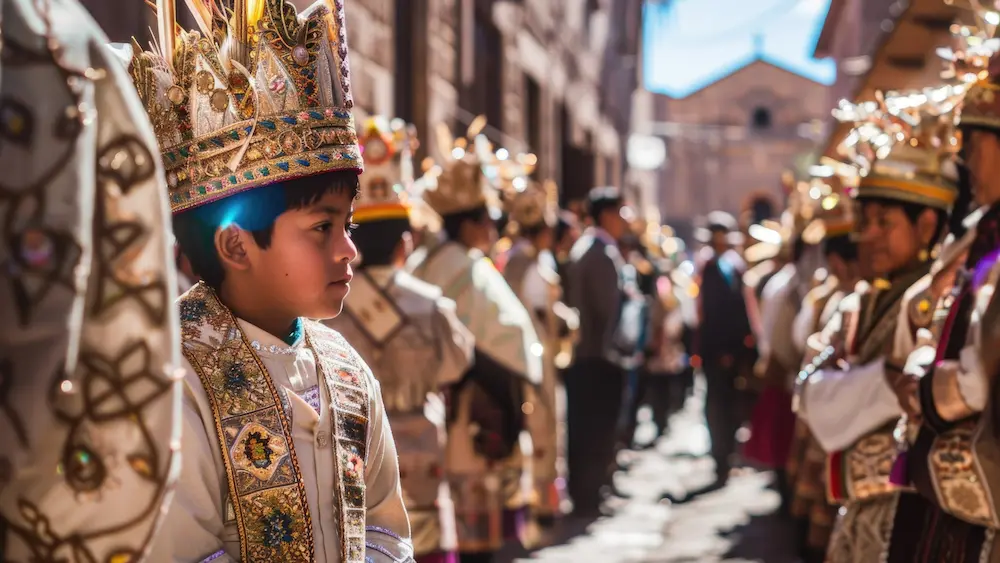
The highlight of the festival is the procession of saints and the Eucharist. Statues are carried through the city streets, often perched on elaborately decorated platforms. Devotees follow with prayers and hymns, creating a moving atmosphere of faith and devotion.
The festival features traditional Andean dances like the Qhapaq Ch’unchu, Apu Inka, and Ch’arki. Dancers wear vibrant costumes adorned with feathers, beads, and embroidery. Live bands play a mix of native flutes, drums, and Spanish-influenced instruments, filling the streets with rhythm and energy.
Cofradías, or religious brotherhoods, are essential to the festival. Each group is responsible for a particular saint, ensuring the preparation of the platform, organizing dancers, and coordinating decorations. Their dedication maintains the continuity of Corpus Christi traditions from generation to generation.
With the arrival of the Spanish, evangelization reshaped ancient traditions. In 1572, Viceroy Francisco de Toledo ordered the replacement of the Incan mummies with images of saints and virgins, brought from different neighborhoods and surrounding towns. During its early years, the festival included the presence of the Royal Ensign of the Incas, an honorary title granted to an Incan noble. This figure had the right to appear in ceremonies dressed as an Inca and to carry symbols of power such as the Mascaipacha (royal headdress) and the royal standard.
You might also want to check out: Cusco in December
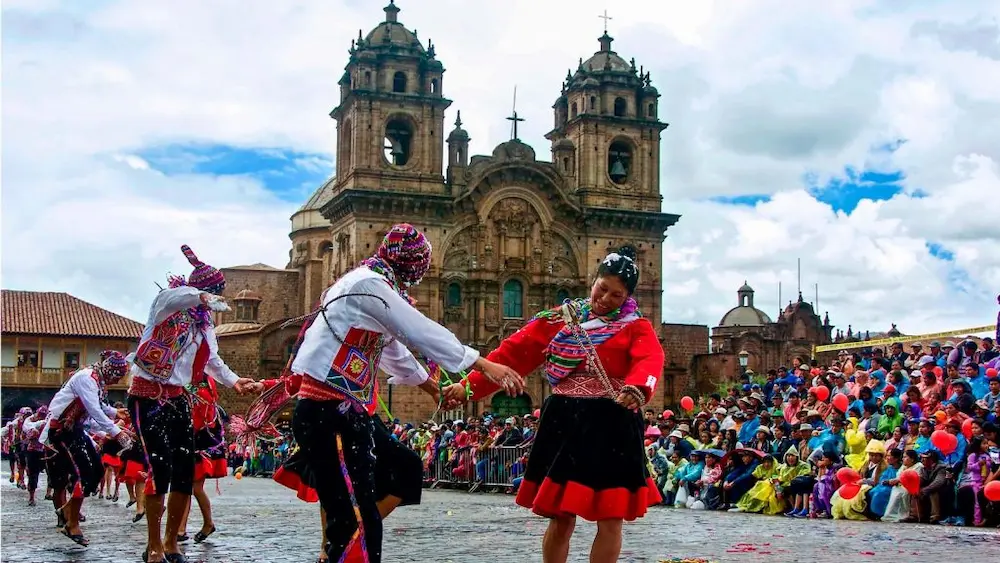
During the festival, Cusco's historic center overflows with processions, and vehicular traffic is restricted. Walking is the best option, so wear comfortable shoes, as the processions involve long and slow walks. Since Corpus Christi takes place in June, Cusco experiences intense sunshine. Protect your skin with sunscreen and wear a hat or cap. Additionally, stay hydrated, as the altitude and climate can affect your endurance. To avoid inconveniences, watch over your belongings. The large crowds can lead to unfortunate incidents, so carry only essentials. Also, pay attention to the dance troupes and image carriers, as the rhythm of the procession can catch the inattentive by surprise.
The Plaza de Armas is the heart of the festival and the prime location to view the main procession of saints and the Holy Eucharist. However, it can become extremely crowded, especially during peak hours.
Corpus Christi in Cusco is a deeply religious celebration. Being mindful of local traditions shows respect and enhances your experience.
Cusco becomes very busy during Corpus Christi, so planning in advance is crucial.
Walking is the most convenient way to navigate the crowded streets during the festival. Most processions are in the city center, so everything is within walking distance.
Taxis are readily available, but expect heavy traffic and occasional road closures around the Plaza. Agree on the fare before getting in.
Public transport can be used to reach areas farther from the historic center, but be prepared for delays due to the festival.
By following these tips, visitors can enjoy Corpus Christi in Cusco safely, respectfully, and fully immersed in its unique blend of tradition, faith, and culture.
You might also want to check out: The last living Inca Town: Ollantaytambo city history

Beyond religious rituals, the festival offers a rich cultural experience for visitors.
Street vendors and local markets serve typical dishes such as cuy chactado (fried guinea pig), anticuchos (beef heart skewers), and chicha morada (purple corn drink). Families also prepare offerings for the saints, including fruits, flowers, and baked goods.
Local artisans sell handwoven textiles, colorful ceramics, and silver jewelry, making it a perfect time to explore Cusco’s artisan markets. These crafts reflect the region’s rich heritage and support community livelihoods.
Important religious sites, such as the Cusco Cathedral and La Compañía de Jesús, play a central role in the celebrations. Each church hosts masses and provides a backdrop for the grand processions, enhancing the festival’s spiritual and architectural significance.
Corpus Christi in Cusco offers a unique opportunity to witness the fusion of Catholic and Andean traditions. The festival’s spiritual depth, combined with vibrant cultural displays, makes it an unforgettable experience.
Visitors can enjoy live music, traditional dances, local cuisine, and artisan markets, all while participating in one of the most emblematic festivals in Peru. It’s an immersive journey into Cusco’s history and heritage.
By attending and respecting the festival, visitors contribute to the preservation of centuries-old traditions. Corpus Christi in Cusco continues to unite communities and keep cultural identity alive in the modern era.
You might also want to check out: Inca calendar: Solar alignments at Machu Picchu
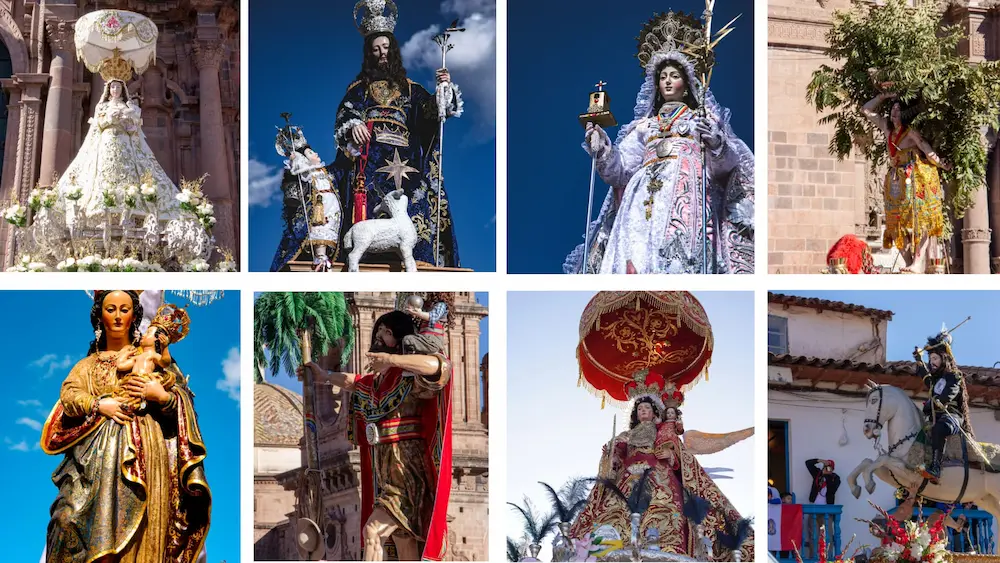
Fifteen images of saints and virgins parade in this grand procession, each with its unique history and characteristics:
Just as the Incas believed their mummies remained alive, Cusqueños attribute miraculous and amusing stories to the sacred images. Legends tell of San Sebastián and San Jerónimo racing each year or San Sebastián attempting to court Santa Bárbara. Another widely known tale suggests that once gathered inside the cathedral, the saints hold a secret meeting to discuss Cusco's future.
You can’t experience Corpus Christi without tasting Chiri Uchu, the festival’s signature dish. Its name means “cold spicy” in Quechua and brings together ingredients from all regions of Peru, reflecting the Incan tradition of trade and exchange. Its key components include guinea pig, chicken, sausage, toasted corn, cheese, rocoto (spicy pepper), and cochayuyo (Andean seaweed). Each bite is a fusion of flavors that connects you to the country’s rich gastronomic history.
Corpus Christi is not just a festival; it’s a journey through Cusco’s history, culture, and faith. The streets come alive with devotion, the saints seem to awaken, and the city pulses with an energy like no other. If you visit Cusco during this celebration, get ready to immerse yourself in an experience where every detail, from the grandeur of the procession to the unmistakable flavor of Chiri Uchu, will make you feel part of a tradition that transcends generations.