Image
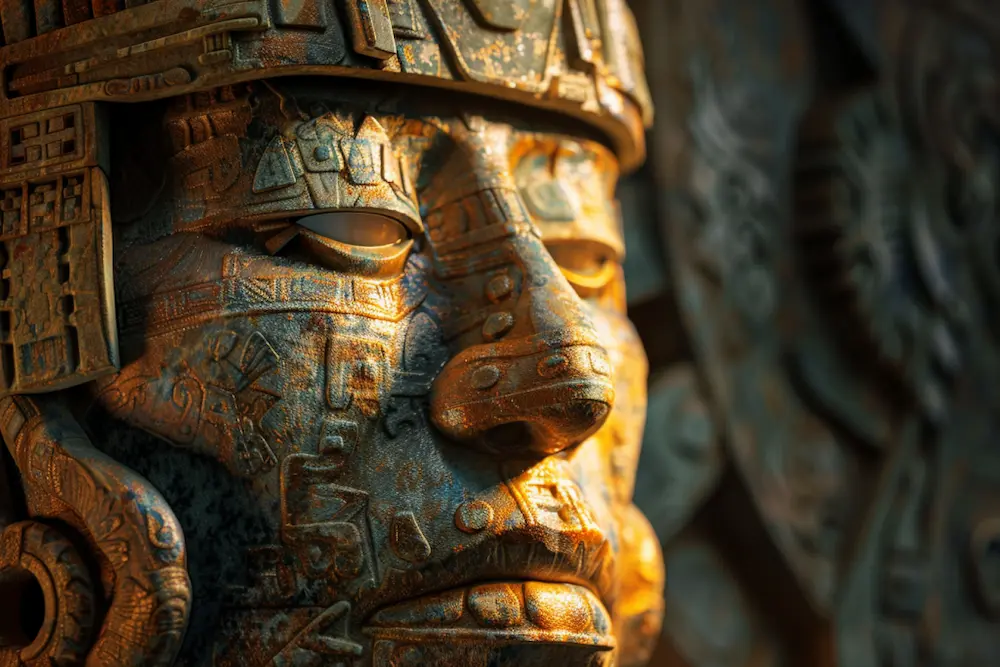
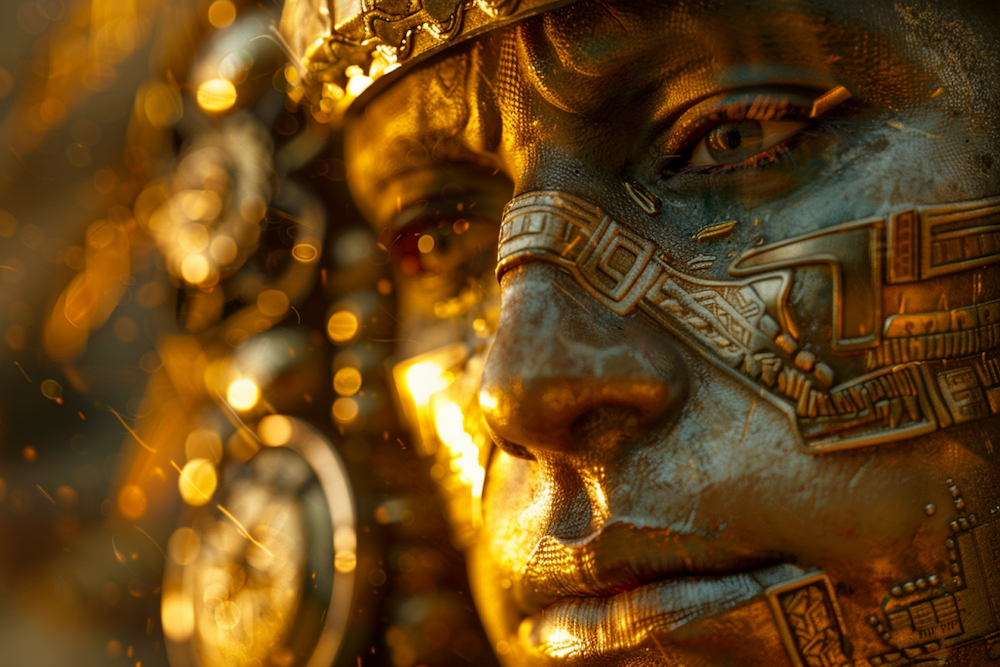
When you land in Cusco, everything feels magical — the mountains, the stone streets, the energy in the air. But here’s the thing: if you really want to understand what you’re looking at, you have to know about Inti the Sun God.
For the Incas, the sun wasn’t just part of nature. It was everything. It was power, it was protection, it was the reason crops grew and the empire stayed strong. Whole temples were built just to honor it. So before you walk into an archaeological site and snap a photo, take a second to understand who Inti was. Once you do, Cusco stops being just beautiful — it becomes meaningful.
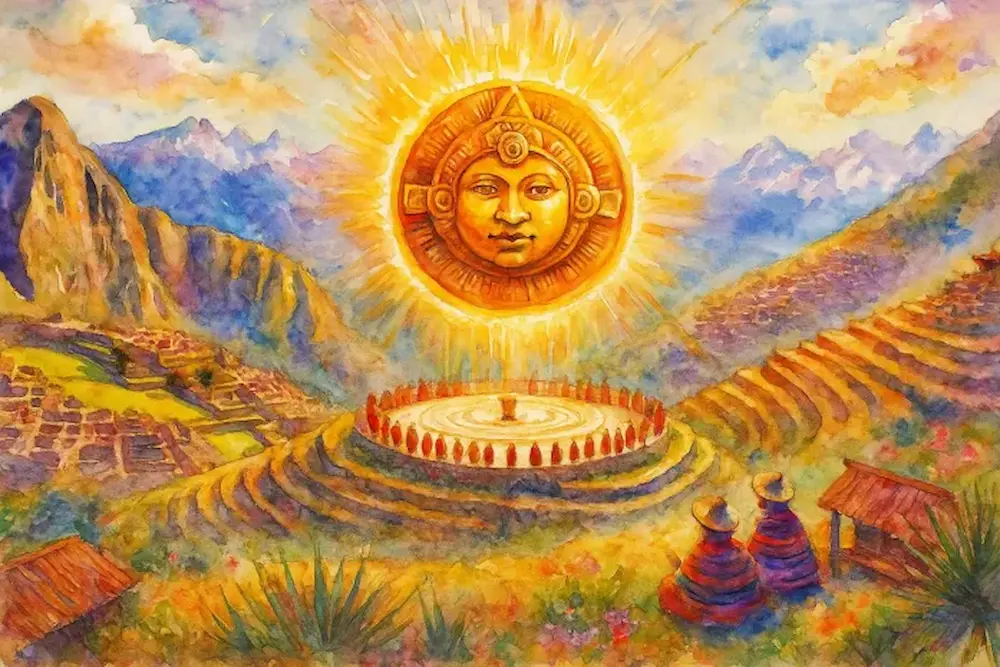
Inti the Sun God was the most important deity in the Inca pantheon and the spiritual pillar of the Inca Empire. More than a mythological figure, Inti represented divine power, cosmic balance, and imperial legitimacy. His influence extended from daily agricultural practices to the political structure of the empire itself.
The Inca rulers believed they were direct descendants of Inti the Sun God. This divine lineage legitimized their authority and reinforced social hierarchy. Emperor Pachacuti, who expanded the empire in the 15th century, strengthened solar worship to unify the territory under a shared spiritual identity. By presenting himself as “Son of the Sun,” the emperor connected politics and religion into one inseparable system.
Agriculture in the Andes depended heavily on observing the sun’s movements. The solstices and equinoxes marked planting and harvesting periods. Inti the Sun God symbolized warmth, fertility, and protection over crops such as maize and potatoes. Solar observation was not symbolic — it was practical and essential for survival at high altitudes.
High priests dedicated to Inti performed ceremonies to ensure harmony between the human world and the cosmos. These rituals included offerings of chicha (corn beer), textiles, and sometimes llamas. The priesthood maintained astronomical knowledge and interpreted solar events as divine messages.
You might also want to check out: Why was Machu Picchu so important to the Incas?
Cusco was not only the political capital of the Inca Empire — it was its sacred center, designed around the worship of Inti the Sun God. The city was considered the “navel of the world,” a spiritual axis where divine power and imperial authority converged. Temples, plazas, and sacred pathways were carefully organized in relation to the sun, turning Cusco into a ceremonial landscape that reflected cosmic order.
At the heart of the city stood Qorikancha, the main temple dedicated to Inti the Sun God. Its walls were once covered in gold sheets that reflected sunlight, symbolizing the physical presence of the sun on earth. Inside, a large golden disk represented Inti, illuminated by the first rays of dawn during important ceremonies.
Qorikancha was not only a religious center but also a political symbol. The mummies of past emperors were kept there, reinforcing the belief that Inca rulers were direct descendants of the sun. Although much of its gold was removed during the Spanish conquest, its original stone foundations still reveal the temple’s precision and sacred importance.
Cusco’s layout followed an advanced system of ceque lines — sacred pathways radiating from Qorikancha toward shrines and surrounding mountains. Many of these alignments corresponded to sunrise and sunset positions during solstices, allowing priests to track seasonal changes.
The main ceremonial square, once called Huacaypata, functioned as a gathering place for large solar rituals. The city itself operated as a living calendar, structured around the movement of Inti across the Andean sky. Modern travelers often use Salkantay Maps to better understand the relationship between archaeological sites, mountain landscapes, and the ancient routes that connected the spiritual centers of the Inca Empire.
Worship of Inti the Sun God was part of everyday life in Cusco. At dawn, priests offered chicha, food, and textiles to welcome the rising sun and ensure agricultural prosperity. Special ceremonies were held during key moments in the solar cycle, reinforcing the belief that harmony depended on maintaining balance with the sun.
Through architecture, ritual, and political symbolism, Cusco became a city built in devotion to Inti — a place where spiritual belief shaped every stone and ceremony
You might also want to check out: Inca Food: traditional dishes and ingredients
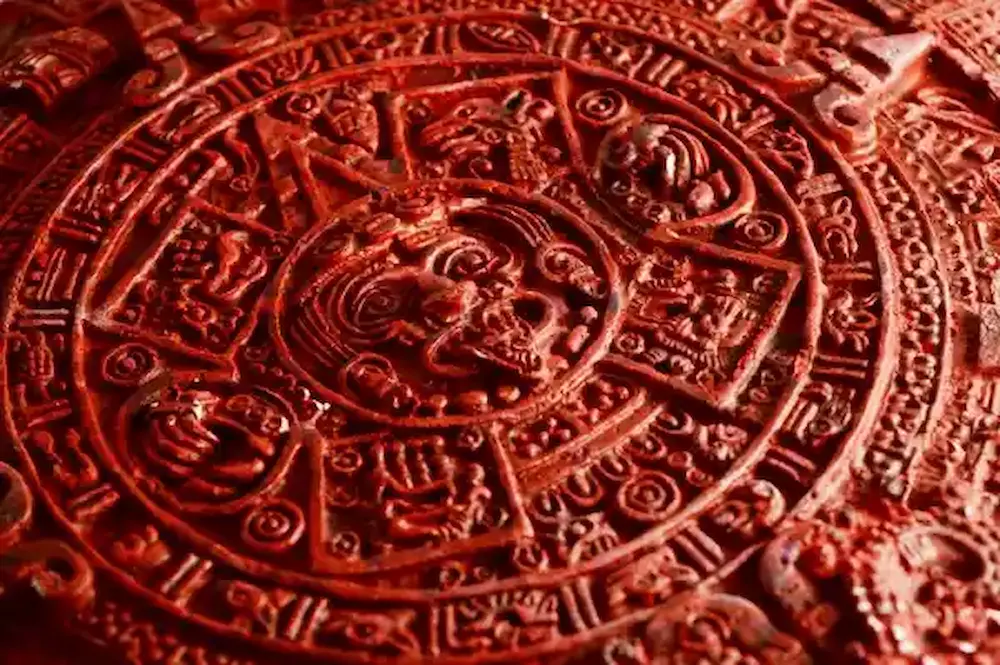
Inti Raymi is the most important historical celebration dedicated to Inti the Sun God, and one of the most powerful cultural expressions of the Inca worldview. Established during the reign of Emperor Pachacuti in the 15th century, the festival honored the winter solstice in the Southern Hemisphere — a crucial astronomical turning point. For the Incas, this was not simply a seasonal change; it marked the symbolic rebirth of the sun and the renewal of life, authority, and agricultural hope across the empire.
In the Inca calendar, the winter solstice occurred around June 24, the shortest day and longest night of the year. The Incas believed that during this time Inti the Sun God was at his weakest and required ceremonial support to regain strength. Without the sun’s vitality, crops could fail and cosmic balance could be disrupted.
The original ceremony lasted several days and began with fasting by the emperor and nobility. At dawn, thousands gathered in the main square of Cusco to await the first rays of sunlight. When the sun appeared over the mountains, the Sapa Inca raised golden cups filled with chicha in offering. Animal sacrifices, particularly llamas, were performed as symbolic acts to nourish the sun and secure prosperity for the coming agricultural cycle.
This ritual reinforced political unity, as leaders from across the empire attended the ceremony, recognizing their shared devotion to Inti.
Following the Spanish conquest in the 16th century, colonial authorities viewed Inti Raymi as a pagan practice incompatible with Catholic doctrine. The festival was officially banned, and public expressions of solar worship were suppressed.
For centuries, the ceremony survived only in fragments through oral traditions and local memory. Despite prohibition, elements of Andean spirituality continued quietly within communities, blending with imposed religious structures. The symbolic reverence for the sun never fully disappeared — it adapted and endured.
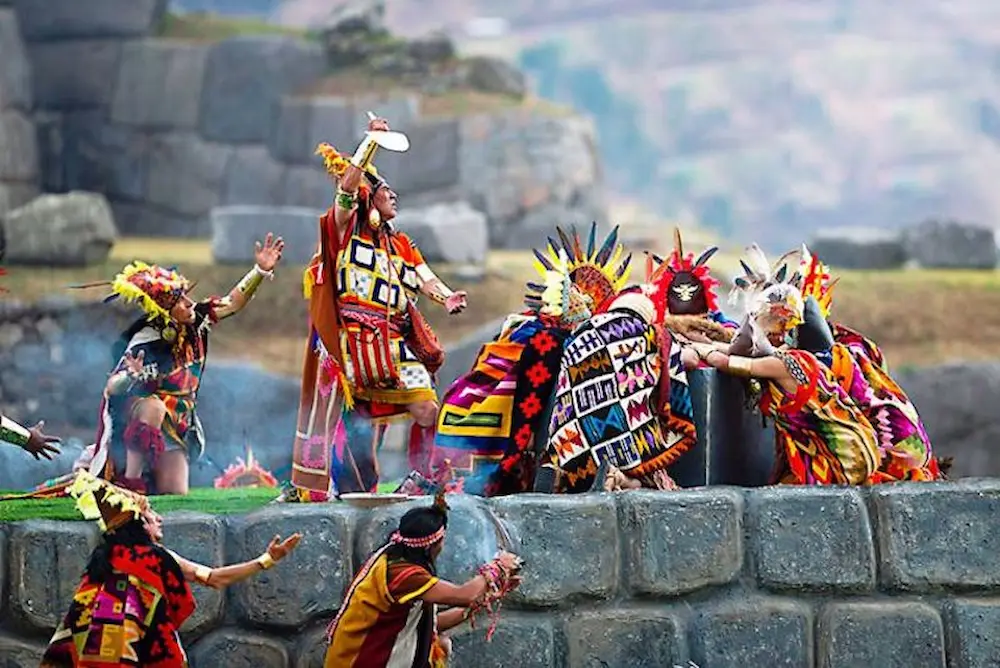
In the 20th century, Inti Raymi was revived as a historical and cultural reenactment. Today, the main performance takes place at Sacsayhuamán, the monumental Inca ceremonial complex overlooking Cusco.
Actors representing the Sapa Inca, priests, and members of the four regions of the empire recreate the ancient ceremony with traditional costumes, music, and Quechua language dialogue. Although the event is now theatrical, its symbolism remains powerful. It celebrates Indigenous heritage, reinforces regional identity, and honors Inti the Sun God as a foundational element of Andean culture.
For travelers, attending Inti Raymi offers more than spectacle. It provides insight into how ancient cosmology continues shaping modern cultural pride — connecting past and present through the enduring light of the sun.
The Incas expressed devotion to Inti the Sun God not only through rituals, but also through powerful visual and architectural symbolism. Solar imagery was embedded into temples, sacred objects, urban design, and artistic traditions. These representations were not decorative — they were intentional reflections of a worldview in which the sun governed life, authority, and cosmic balance.
The most sacred representation of Inti the Sun God was a massive golden disk once displayed inside Qorikancha. This disk symbolized the physical presence of the sun on earth and was positioned to reflect natural sunlight entering the temple at dawn. Gold, considered the “sweat of the sun,” was chosen not for wealth, but for its spiritual symbolism.
When the Spanish arrived in Cusco, this golden emblem was removed and melted down. Although the object itself no longer exists, its meaning remains deeply rooted in Andean memory. The image of the radiant sun disk continues to represent identity, continuity, and ancestral pride throughout the region.
Inca architecture reveals advanced astronomical knowledge, particularly in temples dedicated to solar observation. Trapezoidal windows and curved stone walls were strategically positioned to interact with sunlight during key moments of the year.
At Machu Picchu, the Temple of the Sun demonstrates this precision. During the June and December solstices, sunlight enters specific openings and illuminates designated interior stones. These alignments were not accidental — they allowed priests to track solar cycles and determine important agricultural and ceremonial dates. Architecture itself became a living instrument honoring Inti the Sun God.
The symbolism of Inti did not disappear after the fall of the Inca Empire. Today, many Andean communities continue weaving sun motifs into textiles, ponchos, and ceremonial garments. Radiating patterns, circular designs, and bright golden tones echo the ancient solar disk.
These woven representations are more than artistic tradition — they reflect cultural resilience. By incorporating symbols associated with Inti the Sun God into everyday items, modern artisans preserve a connection between ancestral spirituality and present-day identity. Through art and craftsmanship, the legacy of the sun continues to shine across the Andes.
Understanding Inti the Sun God becomes far more meaningful when you explore the sacred spaces where his presence was once honored. Around Cusco, several archaeological sites preserve clear evidence of solar worship, astronomical precision, and ceremonial devotion. Visiting these places allows travelers to connect historical knowledge with physical landscapes shaped by Inca cosmology.
One of the most powerful places to understand Inti is Qorikancha. Although the Spanish constructed the Convent of Santo Domingo over the original temple, the finely cut Inca stone walls remain visible at the base of the colonial structure.
These surviving foundations demonstrate the architectural mastery dedicated to Inti the Sun God. The precision of the stonework — perfectly fitted without mortar — reflects the temple’s sacred importance. Standing there today, visitors can clearly see the contrast between Inca and colonial construction, symbolizing both disruption and resilience in Andean spiritual history.
Located on a hill overlooking Cusco, Sacsayhuamán served as a monumental ceremonial complex closely linked to solar rituals. Its massive zigzagging stone terraces create a dramatic setting that emphasizes scale, power, and sacred intention.
Today, Sacsayhuamán is the main stage for the annual Inti Raymi celebration. Its elevated position allows expansive views of the surrounding mountains, reinforcing its symbolic role as a space where earth and sky connect. The site’s layout suggests it functioned not only as a fortress, but as a gathering place for large ceremonies honoring Inti the Sun God.
At Machu Picchu, the semicircular Temple of the Sun stands as one of the clearest examples of solar alignment in Inca architecture. Built atop a natural rock formation, the structure features windows precisely positioned to capture sunlight during solstices.
During the June solstice, rays enter the temple and illuminate specific interior stones, marking key astronomical events. This careful orientation suggests the temple functioned as both a sacred ritual space and a solar observatory. For travelers, witnessing this architectural precision reveals how deeply Inti the Sun God influenced Inca engineering, spirituality, and environmental understanding.
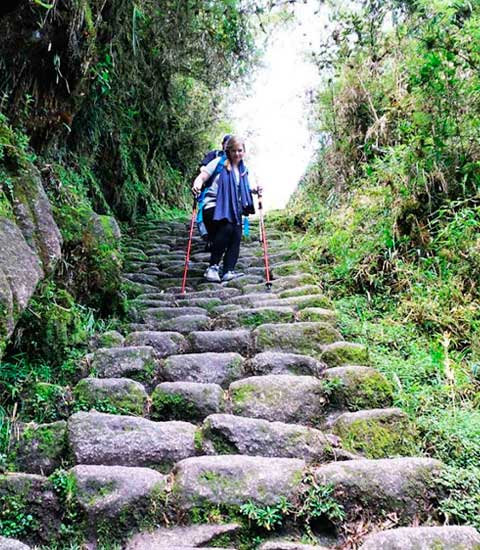
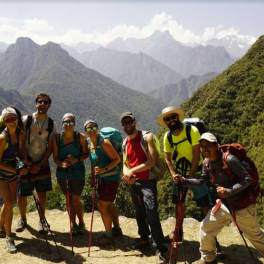
Many visitors discover these sacred solar connections while hiking the Inca Trail, an ancient network of routes that linked important ceremonial centers and allowed pilgrims to approach Machu Picchu through the same landscapes revered by the Incas.
You might also want to check out: Exploring inca textiles: inside the world of inca fashion and culture