Image
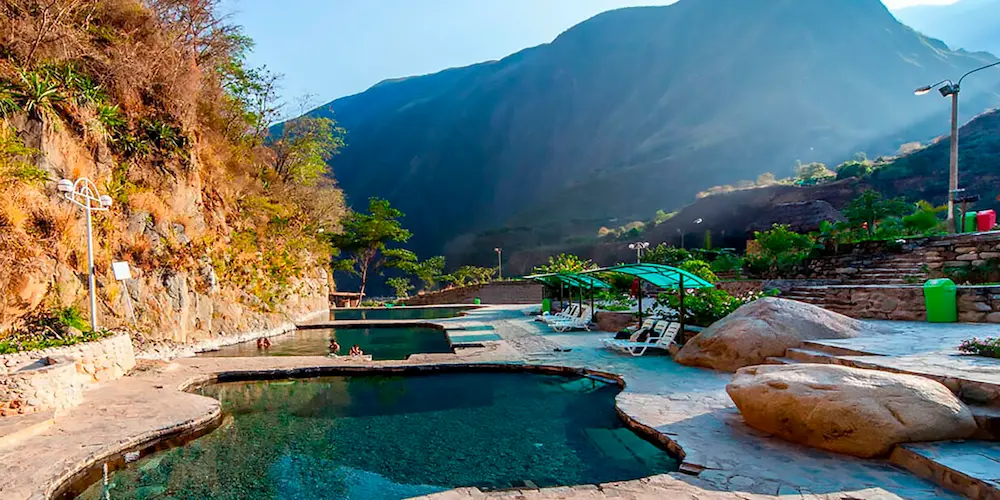
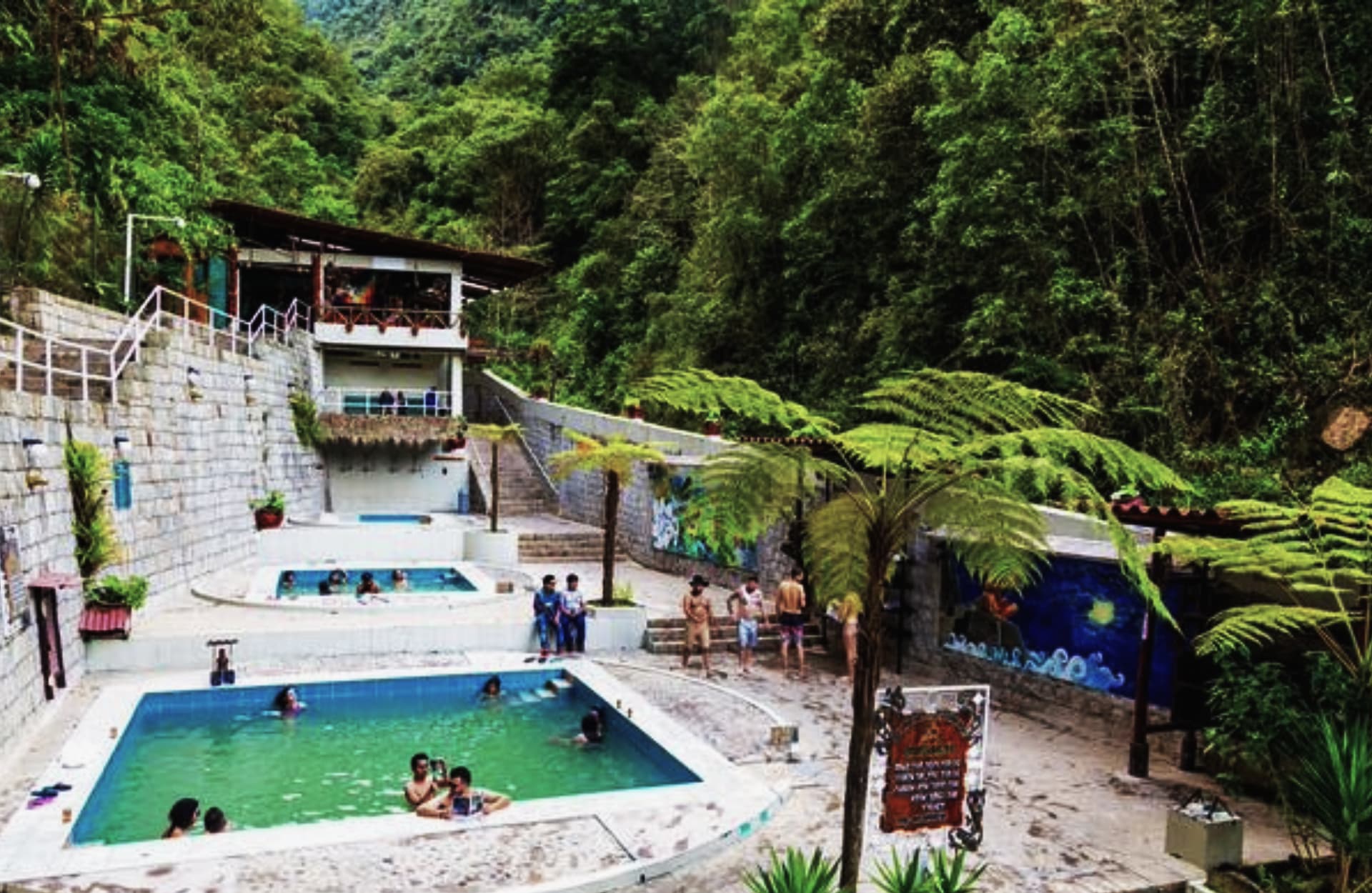
After hiking the Inca Trail or touring Machu Picchu, many tourists choose to relax in these beautiful thermal baths after their trip to the Inca wonder.
The Machu Picchu thermal baths town, known as Aguas Calientes ("Hot Waters"), offer a rejuvenating experience likely enjoyed since Incan times. These sulfur-rich mineral waters are renowned for their medicinal properties. Just 1km from the tiny village but 10km from the famous citadel, the baths are easily accessible on foot from anywhere of Aguas Calientes village.
This small town is the final stop for all trains from Cusco headed to Machu Picchu, making it a obligatory stopover for visitors to the archaeological marvel. As such, it provides amenities like restaurants, hotels and shops, however, its main attraction is its thermal baths. Indulging in the restorative volcanic waters is a perfect way to relax and recharge after conquering the Inca Trail and have marveled at the seventh wonder of the world Machu Picchu.
Machu picchu thermal baths are natural hot springs located in the small town of Aguas Calientes, at the base of the world-famous Inca citadel. These baths are fed by underground geothermal activity, which heats the water and enriches it with minerals such as sulfur and calcium, known for their relaxing and therapeutic properties.
For travelers visiting Machu Picchu, these hot springs offer a perfect contrast to the physical effort of exploring the site. After walking through steep paths, climbing terraces, or completing multi-day hikes like the Inca Trail, soaking in warm mineral water becomes one of the most rewarding experiences of the journey.
Finding the thermal baths near Machu Picchu is relatively easy, as they are located in the small town of Aguas Calientes, the main gateway for visitors to the Inca citadel. This town serves as the base for most travelers before and after their visit, making the hot springs a convenient and accessible activity to include in your itinerary.
The route to the thermal baths is well signposted and suitable for most visitors, although it involves a short uphill walk. Their strategic location allows travelers to visit either before or after exploring Machu Picchu, depending on their schedule. Whether you are staying overnight or just passing through, these hot springs are an easy and rewarding addition to your journey.
The thermal baths are located in Aguas Calientes, also known as Machu Picchu Pueblo. They sit on the upper side of the town, surrounded by lush green mountains and a peaceful natural setting that enhances the overall experience.
This location makes them easily accessible for travelers staying overnight in the area. Despite being close to the town center, the baths feel immersed in nature, offering a relaxing environment away from the more crowded parts of Aguas Calientes.
After visiting Machu Picchu, most travelers return to Aguas Calientes by shuttle bus, which takes around 25 minutes. From there, reaching the thermal baths involves a short uphill walk of approximately 15 to 20 minutes.
The route is clearly marked and relatively easy to follow, making it suitable for most visitors. However, after a long day exploring Machu Picchu, it is recommended to take your time and walk at a comfortable pace.
Although the walk to the Machu Picchu thermal baths is not particularly difficult, it can feel slightly demanding after hours of hiking or walking around Machu Picchu. The incline is moderate, but noticeable for those not used to altitude.
Wearing comfortable shoes and staying hydrated can make the walk much easier. Overall, the baths are accessible to most travelers, including those looking for a relaxing activity after a physically active day.
You might also want to check out: The mita system and mita obligations
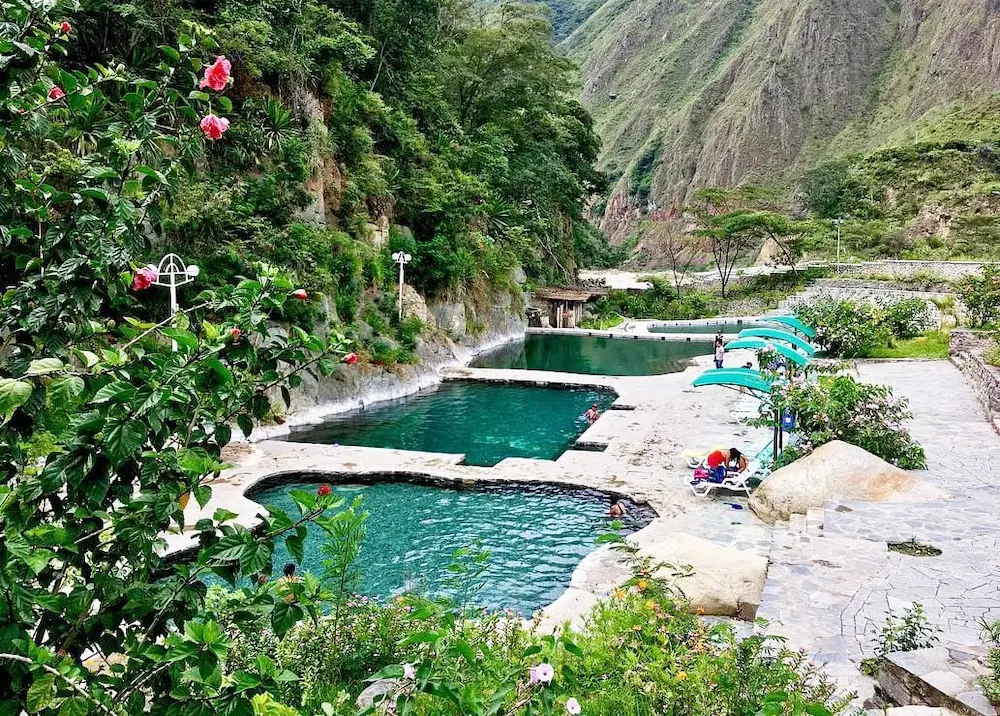
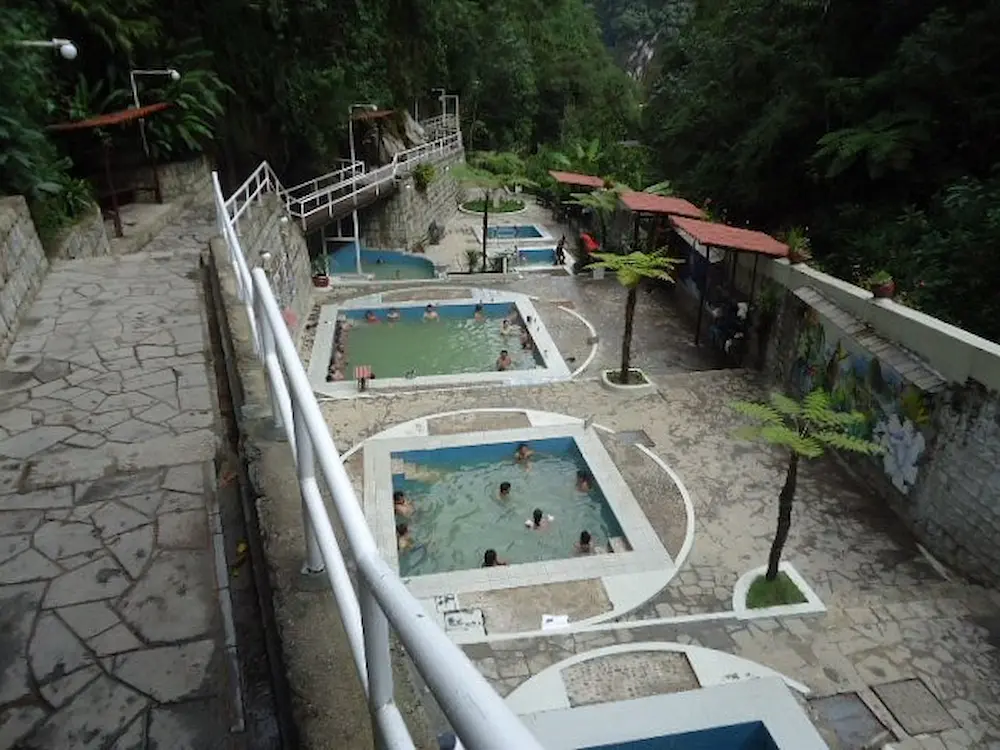
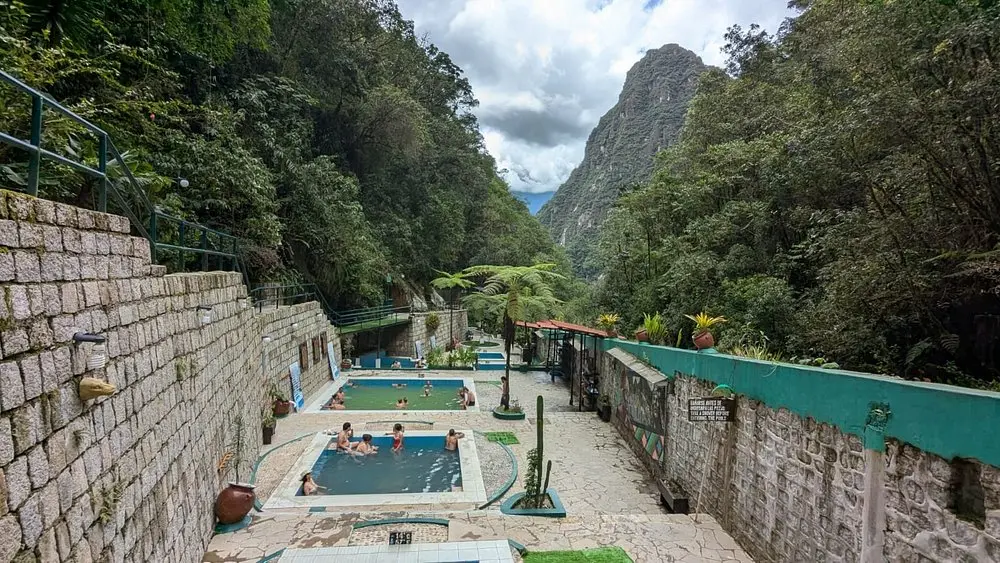
The Machu Picchu thermal baths of Aguas Calientes from an underground spring of volcanic origin, with temperatures ranging from 35 to 46°C, making it a natural and medicinal gem. The hot water emerges from underground channels and flows through the rocks at high temperatures. These are led to small pools where it is not possible to swim, just relax and enjoy the natural environment. The water in the pools is dull yellow, giving the impression of being dirty, although in reality it is the color of sulfur, in addition to containingcontain minerals such as silicon, magnesium, calcium, iron, and potassium.
Rather than a swimming destination, these thermal baths provide an opportunity to soak in the natural heat source and let the volcanic waters' therapeutic and healing properties that provide relief to tired muscles and various joint pains work their rejuvenating magic. Therefore, it is advisable for individuals suffering from joint ailments to visit these medicinal waters. As well, set amid the breathtaking Andean landscape, unwinding in the peaceful pools offers weary hikers a chance to enjoy the simple pleasures of nature's restorative hydrothermal gifts.
Its benefits offered by the thermal baths of Aguas Calientes can help the metabolism and a good digestion, can help release toxins, can level blood pressure, promote skin oxygenation and can be useful for medical treatments and physiotherapy.
To reach Aguas Calientes from Cusco, it is the same way to go Machu Picchu.
From Cusco, take a car to Ollantaytambo. Once in there, head to the Ollantaytambo train station that is so close (remember to purchase your train ticket beforehand). This is the only mode of transportation will take you to the Aguas Calientes station. From there you can walk to the Machu Picchu thermal baths for two reasons, first, there is no transportation to that place, and second, the town is quite small, so you shouldn't have trouble finding your way around. The second way, you can take the train stright to Aguas Calientes station from Cusco, but the diferente is the expensive train ticket also.
Once in the town of Aguas Calientes, to get to the thermal baths, just follow the path opposite the current of the river that goes down in the middle of the city. This main avenue is called ‘Hermanos Ayar’. You will walk less than 1 kilometer away from the final train station and will locate the thermal baths. Good luck.
Most visitors opt to soak in the rejuvenating hot springs of Aguas Calientes after their daytime tour of the iconic Machu Picchu ruins, whether in the late afternoon or evening hours. To allow time, plan to spend at least one night in a hotel in the nearby town. The dry season between April and October is the most popular time, with little rainfall.
Unlike this, visiting during the rainy season from November to March offers a unique experience relaxing in the outdoor thermal pools while being bathed by intense tropical downpours. Besides, No matter when you go, the baths are open daily from 5am to 8pm, with Sundays being the most crowded. Up to you.
At this time, once you are inside, secure your belongings in the locked lockers provided before using the changing rooms and showers to prepare for bathing. Before, maybe the Infrastructure of the Machu Picchu thermal baths have changed or no, the thermal bath complex consists of five small spring-fed pools with a basic yet functional infrastructure - dressing areas, showers, restrooms and a coffee bar serving alcoholic and non-alcoholic beverages. Finally, you sure to come prepared with a bathing suit, towel, sandals and any other personal toiletries needed. If you forget anything, you can purchase supplies at the entrance gate.
Thank you to read Kenko Adventures's blog, the safest and most reliable option is to travel with a travel agency. Essentially, they organize your entire trip, leaving you to fully enjoy each place you visit.