Image
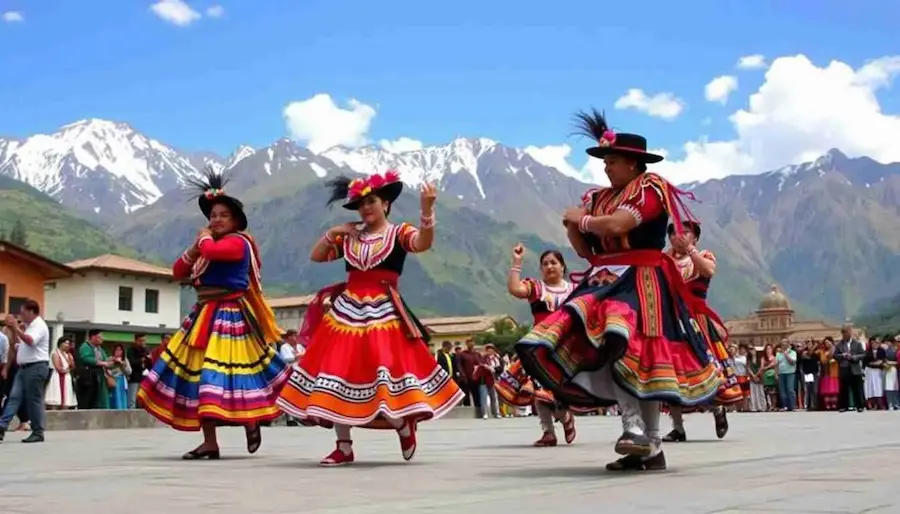
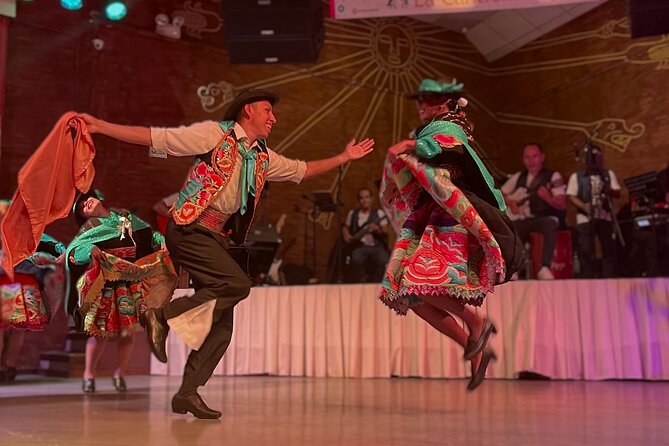
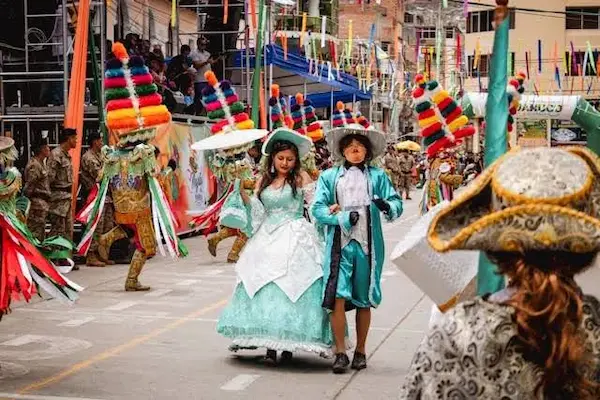
Traditional peruvian dances are one of the most powerful ways to experience the country’s culture, history, music, colors, and living traditions in a way that feels much deeper than simply visiting a landmark.
When you watch a traditional dance in Peru, you are not only seeing costumes and choreography. You are seeing stories passed down through generations. Some dances honor the mountains, others represent ancient rituals, colonial history, religious devotion, harvest cycles, community identity, or the connection between the Andes, the coast, and the Amazon.
For travelers, this makes traditional Peruvian dances a beautiful part of the journey. Whether you are visiting Cusco, Puno, Lima, Arequipa, the Sacred Valley, or a small Andean town during a local festival, dance can help you understand Peru from a more human and emotional perspective.
In this guide, you will discover what Peruvian traditional dances are, why they are important, the most famous dances in Peru, where to see them, and how to include cultural shows and festivals in your travel itinerary.
You might also be interested in reading: Best peruvian markets by city
Traditional peruvian dances are cultural expressions that combine music, movement, costumes, masks, symbolism, and community participation. They are performed during festivals, religious celebrations, civic events, cultural shows, local ceremonies, and regional competitions.
Each dance has its own meaning. Some are joyful and festive, while others are ceremonial, dramatic, or spiritual. Many dances reflect Peru’s mixed heritage, including Indigenous Andean traditions, Spanish colonial influence, African heritage, and Amazonian culture.
You might also be interested in reading: Peru in July: Weather, Festivals and Travel Tips
Traditional dances are important in Peru because they preserve history, strengthen community identity, and keep regional traditions alive. They are also one of the clearest ways to see how diverse the country is.
Peru is not a single cultural experience. The coast, Andes, and Amazon each have different rhythms, clothing, music, and celebrations. Dance helps show this diversity in a way that is visual, emotional, and easy for travelers to connect with. For travelers who are exploring iconic destinations like Cusco and planning Sacred valley Machu Picchu 2 day tour, witnessing traditional dances offers an unforgettable cultural layer to complement the breathtaking landscapes.
Many Peruvian dances tell stories about the past. Some represent Inca heritage, others reflect colonial encounters, religious devotion, rural life, or social satire.
Through dance, communities remember important events, ancestral traditions, and symbolic characters. This makes traditional dances a form of cultural storytelling.
In many towns, dance groups are a source of pride. Participating in a festival is not only about performing; it is about representing the community.
Dancers often inherit roles from family members or belong to groups that have existed for many years. This creates a strong emotional connection between dance, family, faith, and local identity.
For travelers, traditional dances offer a more authentic way to experience Peru. Instead of only visiting famous tourist sites, you can see how people celebrate, express devotion, and preserve cultural traditions.
This is especially valuable in destinations like Cusco, Puno, Paucartambo, Arequipa, and the Sacred Valley, where festivals and dances are still deeply connected to local life.
Traditional dances help travelers understand that Peru is made up of many cultural worlds. A dance from the coast can feel completely different from one performed in the Andes or the Amazon.
On the coast, dances may show elegance, rhythm, and Afro-Peruvian influence. In the Andes, many dances are connected to agriculture, mountains, faith, and community life. In the Amazon, dances often reflect nature, local identity, and ancestral traditions.
This diversity makes Peruvian dance one of the most expressive ways to understand the country.
Many traditional dances in Peru preserve Indigenous and Andean elements that have survived for generations. These dances may include references to the land, the mountains, animals, harvests, ancient beliefs, and community rituals.
Even when dances include Catholic elements, they often maintain a strong Andean identity. This mixture of traditions is one of the reasons Peruvian culture feels so rich and unique.
You might also be interested in reading: Fiesta de la Virgen del Carmen en Paucartambo: Complete Guide
Peru has hundreds of traditional dances, and each region has its own cultural expressions. Some dances are widely known throughout the country, while others are strongly connected to specific towns, festivals, or communities.
Below are some of the most famous traditional dances in Peru that travelers may see during cultural events, festivals, or performances.
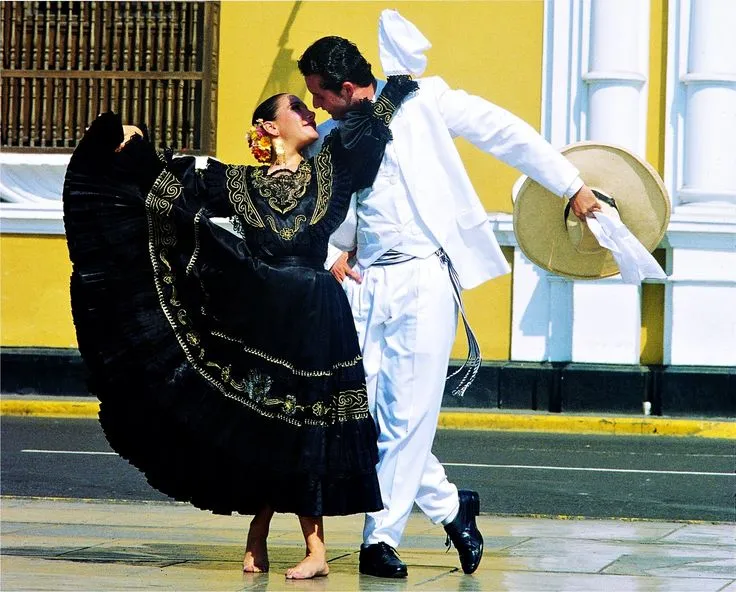
The Marinera is one of the most famous dances in Peru and is often considered the national dance. It is elegant, romantic, and full of graceful movements. Dancers use handkerchiefs while performing a courtship-style choreography.
The dance is especially popular on the northern coast, with Trujillo being one of the best-known places to experience it. For travelers, the Marinera is a beautiful introduction to Peru’s coastal culture, elegance, and musical tradition.
Huayno is one of the most representative traditional dances of the Peruvian Andes. It is lively, emotional, and deeply connected to rural communities, festivals, weddings, and local celebrations.
The dance is usually performed with colorful Andean clothing and energetic music. It reflects joy, courtship, community life, and the strong cultural identity of highland regions such as Cusco, Ayacucho, Huancayo, Puno, and Apurímac.
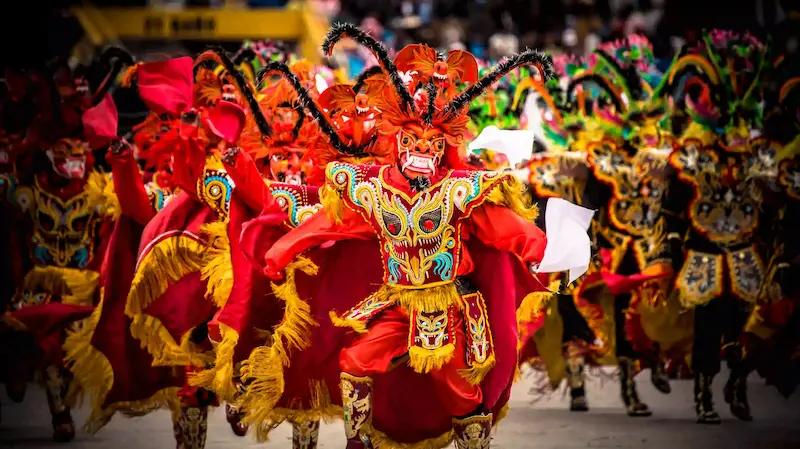
The Diablada is one of the most visually striking dances in Peru. It is known for its dramatic masks, colorful costumes, powerful music, and symbolic representation of spiritual forces.
This dance is especially famous in Puno during the Virgen de la Candelaria Festival. For travelers, the Diablada is unforgettable because it combines religion, theater, rhythm, and intense visual expression.
The Scissors Dance, known in Spanish as Danza de Tijeras, is one of Peru’s most impressive traditional dances. It is physically demanding and includes jumps, turns, acrobatic movements, and ritual challenges.
This dance is strongly connected to regions such as Ayacucho, Huancavelica, and Apurímac. It is fascinating to watch because it combines endurance, music, spiritual symbolism, and exceptional skill.
The Huaconada is a traditional dance from the central Andes, especially associated with the town of Mito in the Junín region. Dancers wear expressive masks and perform movements connected to authority, order, and ancestral tradition.
This dance is important because it preserves deep community symbolism. For cultural travelers, Huaconada offers a glimpse into how dance can represent social values and Indigenous memory.
Festejo is one of the most famous Afro-Peruvian dances. It is energetic, joyful, and full of rhythm, reflecting the African heritage of Peru’s coastal communities.
The dance is commonly seen in cultural shows, especially in Lima and coastal regions such as Chincha. It is a great way to experience the musical richness and movement of Afro-Peruvian culture.
Zamacueca is a traditional coastal dance with strong historical importance. It influenced other dance styles in Peru and Latin America, including the Marinera.
The dance combines rhythm, partner interaction, and expressive movement. It is especially interesting for travelers who want to understand the roots of Peru’s coastal dance traditions.
Valicha is one of the most recognized traditional dances from Cusco. It is cheerful, colorful, and often performed in cultural shows and regional celebrations.
The dance is closely connected to Andean identity and is usually accompanied by lively music and traditional clothing. For visitors in Cusco, Valicha is one of the easiest dances to recognize and enjoy.
Qhapaq Qolla is one of the most important dances performed during the Virgen del Carmen Festival in Paucartambo, near Cusco. It represents merchants from the highlands and is known for its distinctive costumes, masks, and strong symbolic meaning.
This dance is especially valuable for travelers interested in religious festivals, Andean storytelling, and the cultural traditions of Cusco.
Saqras are one of the most iconic dances of the Virgen del Carmen Festival in Paucartambo. The dancers wear colorful costumes and masks that represent mischievous devil-like characters.
Although visually playful, the dance has deep symbolic meaning within the festival. It is one of the most memorable performances for travelers visiting Paucartambo in July.
You might also be interested in reading: Is Peru safe to visit? Essential safety tips for travelers in 2026
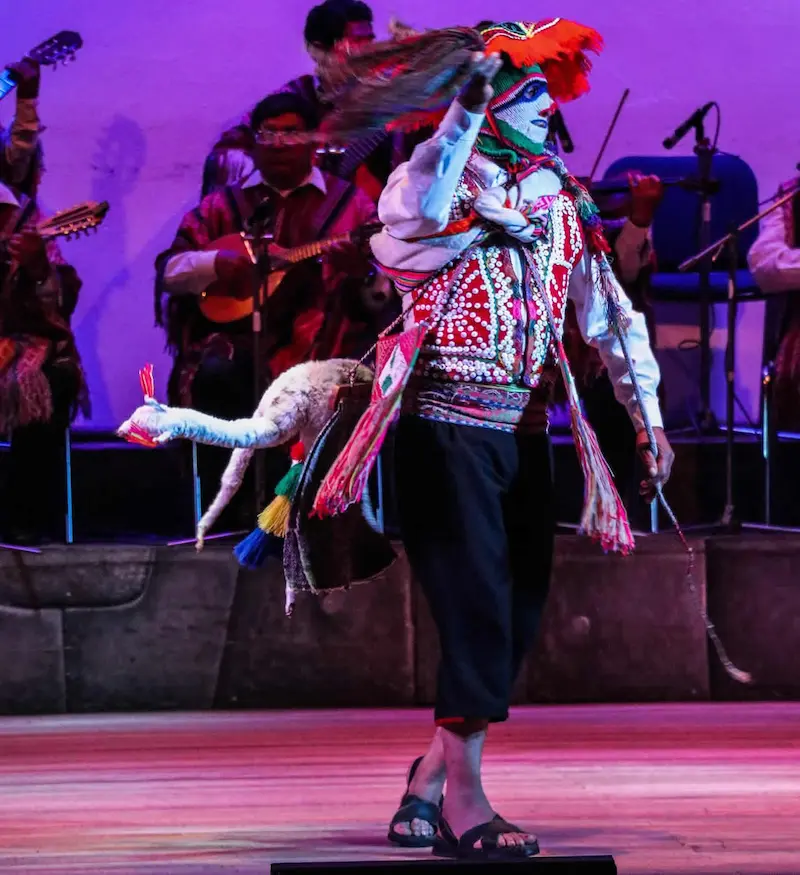
Cusco is one of the best destinations to experience traditional dances in Peru. Because of its strong Andean identity and Inca heritage, many dances in the region are connected to history, spirituality, agriculture, religious festivals, and community celebrations.
Cusco has many festivals where traditional dances are performed in plazas, streets, churches, and community spaces. These events often include colorful costumes, live music, and processions.
Paucartambo is famous for the Virgen del Carmen Festival, where several traditional dance groups participate. Dances such as Saqras, Qhapaq Qolla, Qhapaq Negro, and Qhapaq Ch’unchu are among the most representative.
Travelers who do not coincide with a local festival can still see traditional dances in cultural centers, restaurants, and evening shows in Cusco. These performances are a good introduction to Andean dance and music.
You might also be interested in reading: Visiting Peru in June
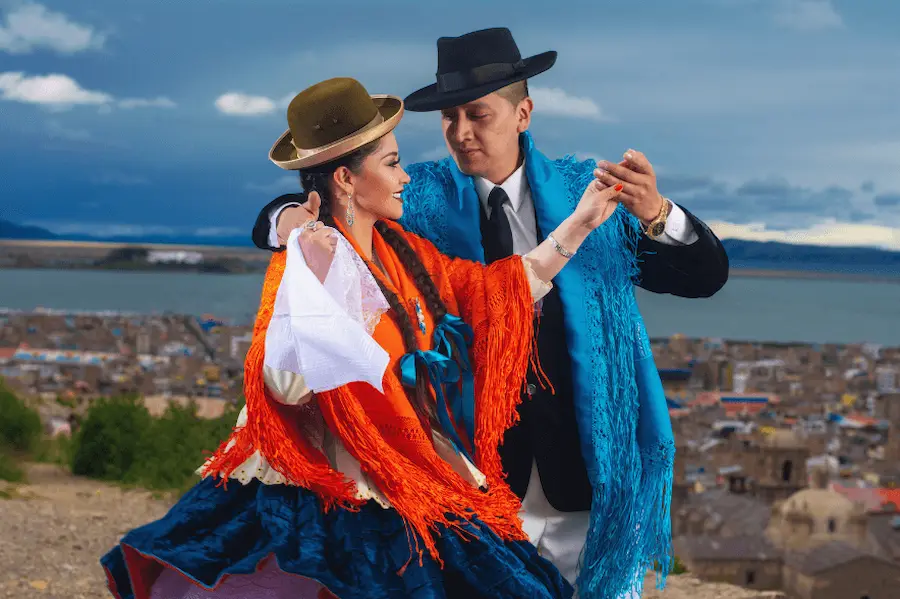
Puno is often considered one of Peru’s cultural capitals because of its music, festivals, and dance traditions. The city is especially famous for the Virgen de la Candelaria Festival.
This is one of the most important festivals in Peru and one of the best opportunities to see traditional dances. Thousands of dancers and musicians participate in parades, competitions, and religious celebrations.
The dances of Puno often reflect the culture of the highlands, Lake Titicaca, and the relationship between Andean communities and religious devotion.
If your main interest is traditional dance, Puno is one of the best destinations to include in your itinerary. The scale, color, and energy of its festivals are unforgettable.
You might also be interested in reading: Celebrating mother's day in Peru
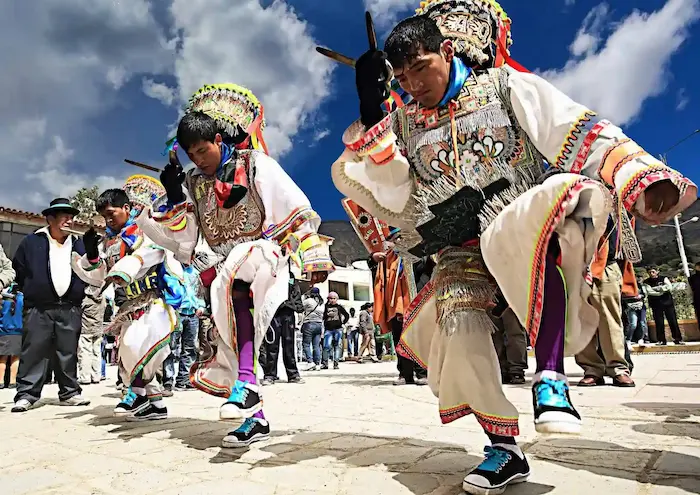
Festivals are the best way to experience traditional dances in their original cultural environment. These events are full of music, costumes, processions, food, and local devotion.
This is one of the most important festivals for traditional dance in Peru. It brings together dance groups from across the region and is known for its scale, energy, and cultural value.
This festival is one of the best cultural experiences near Cusco. It features traditional dances, masks, music, religious devotion, and a strong sense of community identity.
Although Inti Raymi is a theatrical representation of an Inca ceremony, it includes music, costumes, and ceremonial movement that reflect the cultural importance of Cusco and Inca heritage.
The Marinera Festival is one of the best events for travelers who want to see Peru’s national dance performed at a high level.
Many towns in Peru celebrate patron saint festivals throughout the year. These are excellent opportunities to see traditional dances in a more local and authentic setting.
You might also be interested in reading: High season in Peru: A complete guide for your trip
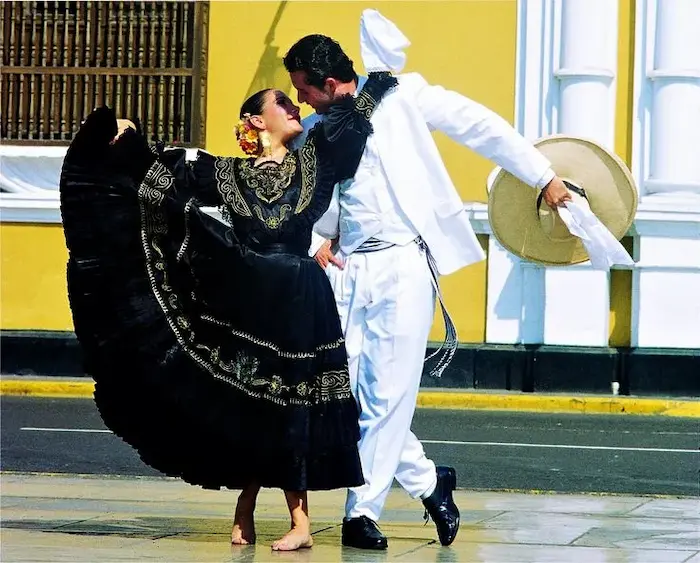
Adding traditional dances to your trip can make your experience more memorable and culturally meaningful. You do not need to plan your entire trip around festivals, but including one cultural event or performance can add a lot of value.
If you want to see a specific festival, check the dates before planning your itinerary. Some of the most important celebrations happen only once a year and may require advance planning.
Local guides and tour operators can help you find cultural events, evening shows, or festivals happening during your travel dates. This is especially useful in Cusco, Puno, and the Sacred Valley.
A great itinerary can combine archaeological sites, local markets, festivals, and traditional dance performances. For example, you can visit Cusco’s ruins during the day and attend a cultural show in the evening.
When attending a festival, remember that many dances are part of religious or community traditions. Avoid interrupting processions, blocking dancers, or treating ceremonies like simple entertainment.
You might also be interested in reading: International airports in Peru: what travelers know
Watching traditional dances is a beautiful experience, but a few tips can help you enjoy it respectfully and comfortably.
Popular festivals can get crowded, especially in places like Puno, Cusco, and Paucartambo. Arriving early helps you find a better place to watch.
Photography is usually allowed in public events, but it is respectful to ask before taking close-up photos of dancers, children, or people in traditional clothing.
Many festivals take place outdoors. In the Andes, mornings and evenings can be cold, even when the day is sunny. Bring layers, comfortable shoes, and sun protection.
Understanding the story behind a dance makes the experience much more powerful. Ask a guide, read about the festival, or pay attention to the characters and costumes.
Whenever possible, support local vendors, buy from artisans, eat at local restaurants, and respect the community hosting the event.
Some of the most famous traditional dances in Peru include the Marinera, Huayno, Diablada, Scissors Dance, Huaconada, Festejo, and dances from festivals such as Virgen de la Candelaria and Virgen del Carmen.
The Marinera is widely considered the national dance of Peru. It is known for its elegance, handkerchief movements, and courtship-style choreography.
You can see traditional dances in Cusco, Puno, Lima, Trujillo, Paucartambo, the Sacred Valley, and many Andean towns during festivals and cultural events.
No. Many traditional dances are part of local festivals, religious celebrations, and community identity. Some shows are created for visitors, but many dances are still deeply connected to local life.
The Virgen de la Candelaria Festival in Puno is one of the best festivals to see traditional dances. The Virgen del Carmen Festival in Paucartambo is also one of the most important cultural celebrations near Cusco.
Peruvian dances can represent history, religion, courtship, agriculture, social roles, spiritual beliefs, colonial memory, local identity, and community traditions.
The Scissors Dance, or Danza de Tijeras, is a traditional Andean dance known for athletic movements, ritual symbolism, and dancers who perform while holding metal objects that sound like scissors.
The Diablada is a traditional dance that uses dramatic masks and costumes to represent symbolic spiritual battles. It is especially famous in Puno during the Virgen de la Candelaria Festival.
In some informal settings, tourists may be invited to dance, especially during community celebrations or cultural shows. However, during religious festivals or formal performances, it is better to watch respectfully unless invited.
Yes, traditional dance shows in Cusco are worth it if you want an easy introduction to Andean music, costumes, and regional dances. They are especially useful for travelers who cannot attend a major festival.