Image
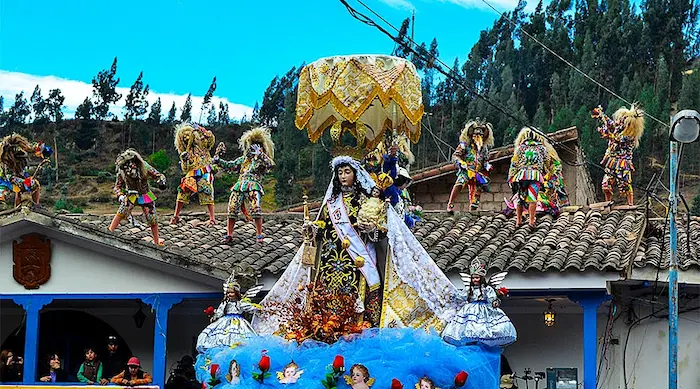
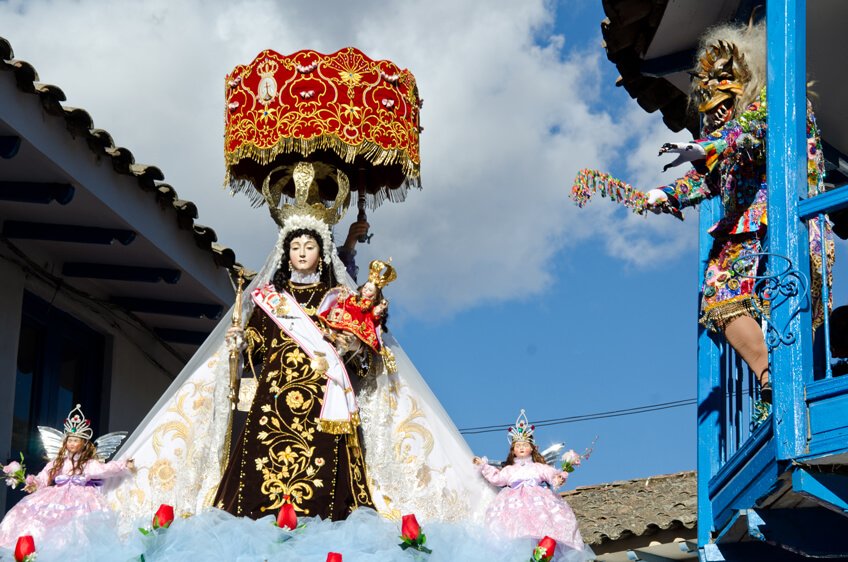
The Fiesta de la Virgen del Carmen is one of the most important religious and cultural celebrations in Cusco, especially in the town of Paucartambo, where every year thousands of devotees, dancers, and travelers gather to pay tribute to Mamacha Carmen.
More than just a festival, it is a living experience: the streets fill with music, masks, processions, dance troupes, faith, and Andean tradition. For many visitors, arriving in Paucartambo during these days means discovering one of the most intense cultural expressions in Peru, where religious devotion blends with traditional dances, popular memory, and a deeply rooted Cusqueñan identity.
The main celebration takes place every year between July 15th and 18th, with July 16th being the central day of the Virgen del Carmen in Paucartambo.
You might also be interested in reading: Is Peru safe to visit? Essential safety tips for travelers in 2026
The Fiesta de la Virgen del Carmen is a religious and cultural celebration dedicated to the Virgin of Carmen, affectionately known in Paucartambo as Mamacha Carmen. Over several days, the town transforms into a vibrant stage of devotion, music, processions, and traditional dances.
This festival represents not only an expression of Catholic faith but also a reflection of Andean identity. It brings together dance troupes, musicians, local families, pilgrims, and visitors who come to witness one of the most iconic events in the Cusco festive calendar.
The most well-known celebration takes place in Paucartambo, a colonial town located in the Cusco region of Peru. Although the Virgin of Carmen is celebrated in different parts of the country, the festival in Paucartambo is one of the most famous due to the strength of its traditional dances, strong community organization, and deep cultural significance.
Paucartambo is located approximately 110 km from the city of Cusco, and during the festivities it welcomes thousands of national and international visitors.
In the Andean world, the word “Mamacha” is a respectful and affectionate way of referring to a sacred motherly figure. That is why, in Paucartambo, the Virgin of Carmen is lovingly called Mamacha Carmen a protective mother to whom devotees give thanks, make requests, and accompany during her celebration.
You might also be interested in reading: Visiting Peru in June
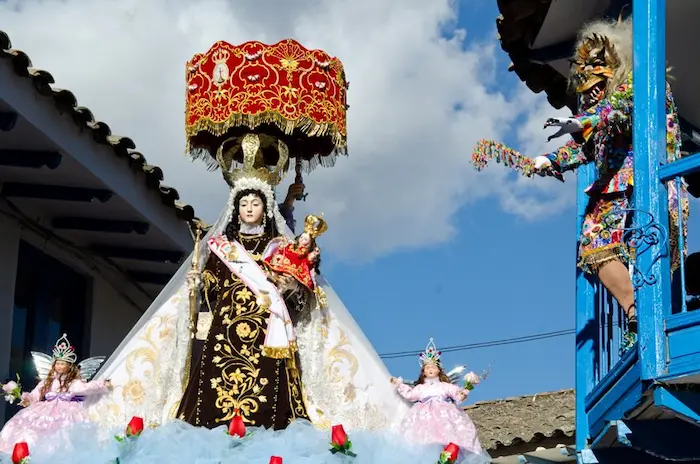
The Fiesta de la Virgen del Carmen in Paucartambo is important because it brings together faith, culture, history, music, dance, and community in a single celebration. It is not a festival created only for tourists; it is a deeply lived tradition for local residents and dance groups.
Each dance troupe plays a symbolic role within the festival. Some represent historical figures, others reflect the relationship between the Andes and the Amazon, and others portray social satire or spiritual beings. This richness makes the celebration one of the most unique religious expressions in the southern Peruvian Andes.
During the festivities, faith is expressed not only through Masses and processions, but also through music, costumes, dancers’ offerings, masks, and the participation of entire families. For the people of Paucartambo, the festival is a heritage passed down from generation to generation.
The Virgen del Carmen is an essential part of the cultural identity of both Paucartambo and Cusco. Every dance, character, and ritual holds a story that connects colonial history, popular religiosity, and Andean traditions.
The Fiesta de la Virgen del Carmen is also important because it preserves a vital part of Paucartambo’s cultural heritage. Its dances, masks, costumes, music, and rituals are not decorative elements, but inherited expressions that keep the community’s memory alive.
The traditional dances of the Virgen del Carmen are one of the main highlights of the celebration. Dance troupes such as the Qhapaq Qolla, Saqras, Qhapaq Negro, and Qhapaq Ch’unchu represent characters with deep religious, historical, and social meaning.
You might also be interested in reading: Celebrating mother's day in Peru
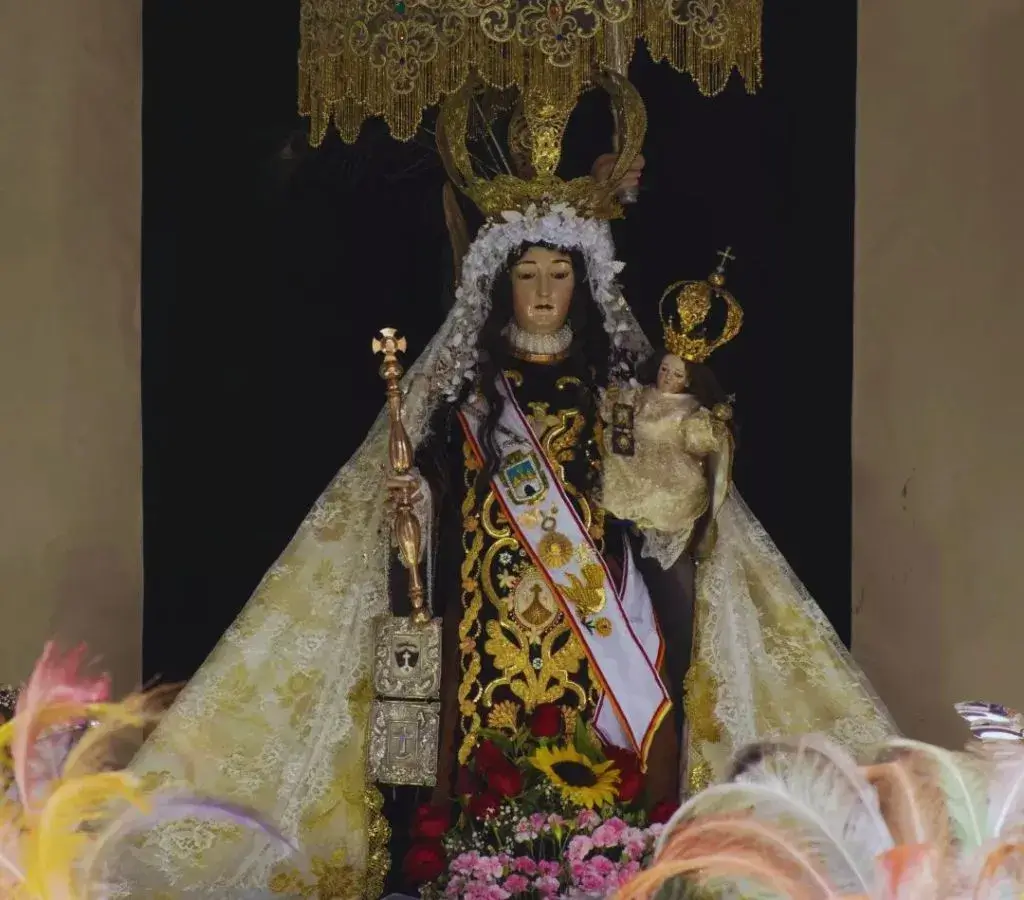
The Fiesta de la Virgen del Carmen in Paucartambo 2026 will take place mainly from July 15th to 18th, with the main central day on July 16th. In some cases, activities may begin earlier with rehearsals, preparations, dance troupe arrivals, and community gatherings.
July 16th is the most important day of the celebration. On this date, religious ceremonies, processions, and traditional dance performances are held in honor of Mamacha Carmen.
The image of the Virgin is carried through the streets accompanied by dancers, musicians, and devotees, creating one of the most emotional moments of the entire festival.
Although the program may vary each year, the general structure usually includes:
July 18th: Farewell and closing of the festival
You might also be interested in reading: High season in Peru: A complete guide for your trip
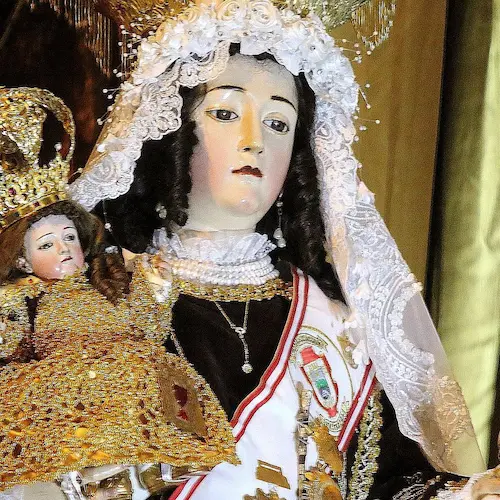
The history of the Virgen del Carmen of Paucartambo is closely linked to the spread of the Catholic faith in the Andes and to the way local communities incorporated Marian devotion into their own cultural expressions. Over time, the festival developed unique characteristics such as symbolic dances, organized dance troupes, traditional music, masks, religious promises, and a close relationship between the Virgin and her devotees.
Devotion to the Virgen del Carmen grew in Paucartambo as a form of spiritual protection. For the faithful, Mamacha Carmen watches over the town, accompanies her devotees, and represents a maternal figure within local religious life.
The festival has remained alive thanks to the participation of its cultural bearers: dancers, musicians, families, mayordomos, and local residents who organize and preserve every detail of the celebration.
Mamacha Carmen holds a central place in the spiritual life of Paucartambo. For many devotees, her image represents protection, hope, and family unity. For this reason, the festival is not only experienced as an annual tradition but as a deep expression of gratitude and devotion.
Although the devotion has Catholic roots, in Paucartambo it blends with Andean elements such as music, dance, community organization, and respect for local symbols. This combination gives the Fiesta de la Virgen del Carmen a unique identity within the religious calendar of Cusco.
You might also be interested in reading: International airports in Peru: what travelers know
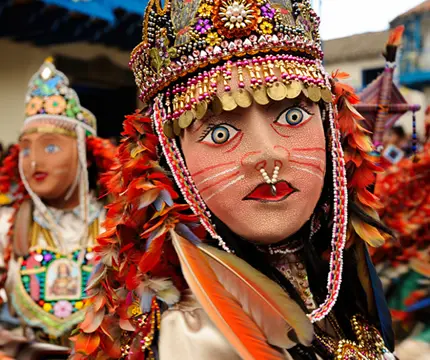
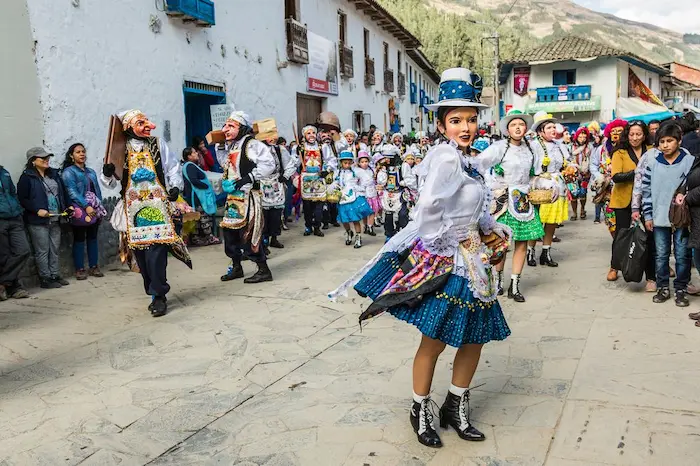
The Fiesta de la Virgen del Carmen is celebrated with Masses, processions, dances, music, visits to the church, gatherings of dance troupes, and symbolic rituals that take place over several days. The town of Paucartambo becomes a ceremonial space where every street, square, and balcony is part of the celebration.
The procession is one of the most important moments. The image of the Virgin is carried through the streets accompanied by dancers, musicians, and devotees. This event expresses the spiritual essence of the festival: devotees accompany Mamacha Carmen, give thanks, and renew their faith.
One of the most anticipated moments is the arrival of the dance troupes to the town. Dancers enter wearing traditional costumes, masks, and accompanied by music, marking the beginning of the festive atmosphere. This entrance fills the streets with color and signals that Paucartambo is ready to honor Mamacha Carmen.
The central Mass is one of the most important religious ceremonies of the Fiesta de la Virgen del Carmen. Devotees, locals, and dancers gather to take part in a ceremony filled with faith, gratitude, and personal promises. For many attendees, this moment represents the spiritual heart of the celebration.
During the procession, the image of the Virgin travels through the main streets of the town. Balconies, squares, and street corners become gathering points to witness the passage of Mamacha Carmen, while dance troupes accompany her with traditional music and performances.
One of the most striking parts of the festival is the so-called “guerrilla,” a symbolic performance where some dance troupes reenact ritualized confrontations. This moment combines folk theater, tradition, and cultural meaning, showcasing the narrative richness of the festival.
You might also be interested in reading: Manco Inca Yupanqui | The last great Inca leader and his legacy
To get to Paucartambo from Cusco, you need to travel by road toward the province of Paucartambo. The journey can take several hours depending on the type of transport, road conditions, and traffic during the festival season. During the festivities, demand for transportation increases significantly, so it is highly recommended to plan your trip in advance.
It is possible to travel independently, but during the festival it can be more challenging due to the high number of visitors, limited transport availability, and reduced lodging options in town.
One of the most common ways to reach Paucartambo from Cusco is by public transportation. Buses and minibuses depart from the city and follow the road route to the town. During the Fiesta de la Virgen del Carmen, demand increases considerably, so it is advisable to leave early and be prepared for possible delays.
Another option is to hire private transport from Cusco. This alternative offers more comfort, flexible schedules, and the possibility of making stops along the way. It is especially suitable for groups or travelers who prefer a more relaxed and organized trip.
Joining an organized tour is one of the most convenient ways to reach Paucartambo. In addition to transportation, it usually includes coordination, scheduling assistance, and in some cases extra visits such as the Three Crosses Viewpoint. This option allows visitors to enjoy the experience without worrying about logistics.
You might also be interested in reading: Winter in Peru: what travelers need to know before visiting
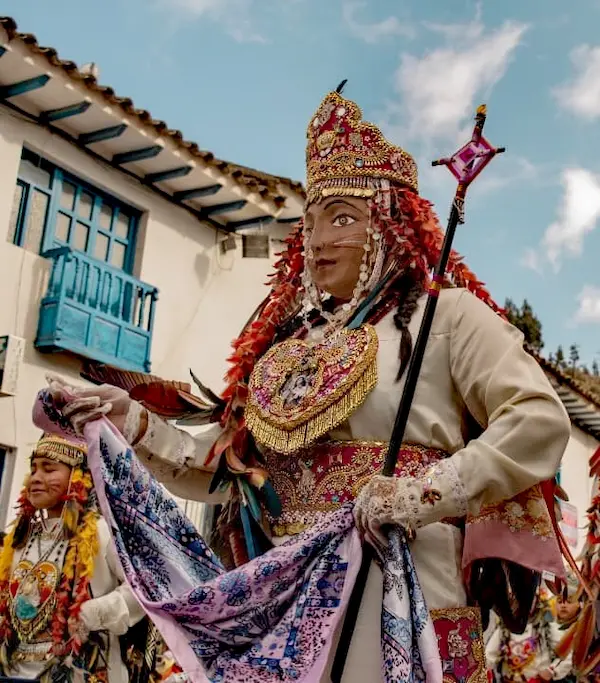
Visiting the Fiesta de la Virgen del Carmen in Paucartambo is a unique experience filled with music, dances, processions, and deep devotion to Mamacha Carmen. However, due to the large number of visitors each year, it is important to plan ahead in order to enjoy the celebration more comfortably and safely.
During the main days of the festival, the town receives thousands of people, which means transportation, accommodation, and viewing spots for events can be very crowded. With proper preparation, you can experience this tradition in a more organized way and make the most of every moment.
During the festival, accommodation and transportation options tend to sell out quickly. To secure better options and avoid inconveniences, it is recommended to book several weeks or even months in advance.
This is especially important if you plan to stay overnight in Paucartambo or also visit the Three Crosses Viewpoint (Mirador de Tres Cruces).
Although the atmosphere during the day is very lively, nights and early mornings in Paucartambo can be quite cold. It is recommended to bring a jacket, sweater, scarf, and layered clothing to better adapt to temperature changes.
Comfortable footwear is also essential, as you will spend many hours walking and standing.
The festival takes place on cobblestone streets and across different areas of the town. Therefore, it is advisable to wear comfortable sneakers or shoes with good grip, especially if you plan to follow the processions or walk long distances.
The Fiesta de la Virgen del Carmen is a religious and cultural celebration deeply meaningful to the people of Paucartambo. Although it attracts many visitors, it is not a conventional tourist show.
It is important to respect the dancers, avoid interrupting the processions, and follow the instructions of organizers and local community members.
As with any large event, it is recommended to keep your phone, camera, money, and personal documents in a safe place. Using a small backpack or crossbody bag can help protect your belongings throughout the day.
You might also be interested in reading: Trekking vs hiking in Peru, what's the difference?
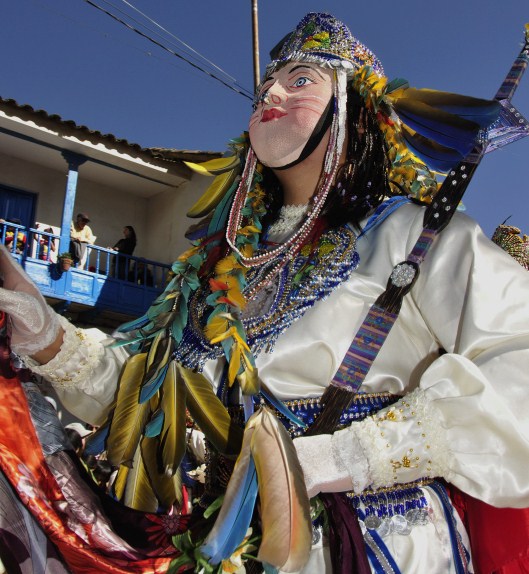
Yes, it is definitely worth visiting the Fiesta de la Virgen del Carmen if you want to experience one of the most authentic and exciting celebrations in Cusco. This festival brings together faith, tradition, music, dances, and a strong cultural identity that remains alive thanks to the participation of the entire town of Paucartambo.
More than a tourist event, it is a deeply human and spiritual experience. For several days, the streets are filled with dance troupes, processions, masks, and expressions of devotion that allow visitors to witness one of Peru’s most important cultural manifestations up close.
The Fiesta de la Virgen del Carmen is ideal for those who enjoy history, traditions, and living cultural expressions. Every dance, character, and ritual has its own meaning, reflecting centuries of Andean and religious heritage.
Visiting Paucartambo during this celebration allows you to observe a tradition that remains an essential part of local life and Cusco’s cultural identity.
The festival has a deep religious and emotional significance. Seeing devotees accompany Mamacha Carmen, fulfill promises, and express their faith with such devotion is a moving experience even for those who do not practice Catholicism.
The main procession, Masses, and acts of gratitude turn the celebration into a moment of intense spirituality.
The Fiesta de la Virgen del Carmen offers extraordinary scenes to photograph. Masks, embroidered costumes, dance troupes, colonial balconies, and the streets of Paucartambo create a unique visual setting.
Every moment of the festival provides opportunities to capture images full of color, movement, and emotion.
If you prefer to experience real traditions instead of conventional tourist activities, this celebration is one of the best cultural experiences in Cusco. The interaction with locals, the community atmosphere, and the intensity of the festival make the trip truly memorable.
The Fiesta de la Virgen del Carmen allows visitors to experience a part of Peru where tradition, faith, and community organization still play a central role. It is an opportunity to better understand the richness of Andean culture and the connection between history and everyday life.
The Fiesta de la Virgen del Carmen in Paucartambo is mainly celebrated from July 15th to 18th, with July 16th being the central day.
The most famous celebration takes place in the town of Paucartambo, located in the Cusco region of Peru.
In Paucartambo, she is affectionately known as Mamacha Carmen.
Some of the most well-known dances include the Qhapaq Qolla, Qhapaq Negro, Qhapaq Ch’unchu, and Saqras.
The main celebration lasts approximately four days, from July 15th to 18th, although preparations may begin earlier.
Yes, it is possible, but during the festival it can be tiring due to the distance, number of visitors, and schedules. Many travelers prefer joining an organized tour.
No. It is both a religious and cultural celebration. It combines Catholic faith, Andean traditions, dances, music, and symbolic characters.
It is recommended to bring warm clothing, comfortable shoes, cash, water, a camera, personal documents, and a small backpack.